Where to Stay Near the Snow Monkeys: Shibu Onsen
Nine public baths, wooden inns, and a stone street you walk in a yukata.
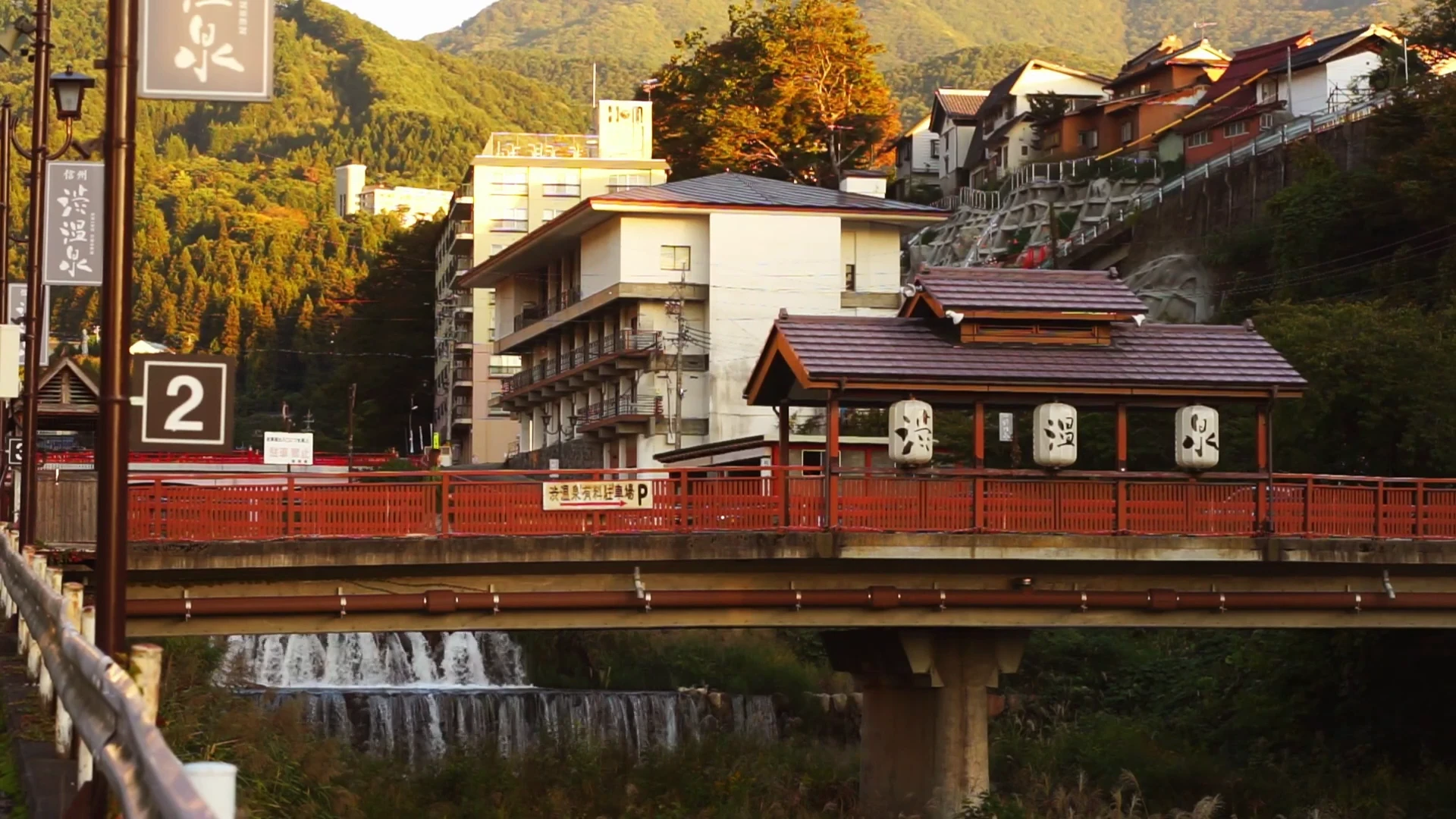
Quick answer
Shibu Onsen is the closest traditional hot-spring town to the snow monkeys — a 1,300-year-old village of wooden ryokan and nine public bathhouses, about 2 km (1.2 mi) from the Jigokudani trailhead. Stay overnight to reach the monkeys at opening and soak in the historic baths after.
On this page
Introduction
Shibu Onsen is a small hot spring village in the mountains of Nagano Prefecture, and the closest traditional accommodation to Jigokudani Monkey Park, the only place in the world where wild snow monkeys bathe in natural hot springs. For more than 1,300 years, mineral-rich water has risen from deep beneath this narrow valley, and the village that grew up around those springs has changed remarkably little. Stone-paved lanes wind between weathered wooden ryokan. Paper lanterns glow after dark. Steam drifts from drains and doorways into the mountain air.
Most visitors come to this part of Nagano to see the snow monkeys, and Shibu Onsen is where many of them spend the night. The village sits roughly 2 km (1.2 miles) from the trailhead that leads to Jigokudani Monkey Park, making it possible to reach the monkeys on foot in the morning and return to a hot bath and a traditional Japanese breakfast by mid-morning. But Shibu Onsen is more than a convenient base. Its nine public bathhouses, its centuries-old ryokan, and its deeply atmospheric streets make it a destination worth visiting in its own right, one that adds a dimension to the snow monkey experience that a day trip from Tokyo or Nagano cannot replicate.
Quick Facts About Shibu Onsen
Location: Yamanouchi, Shimotakai District, Nagano Prefecture, Japan
Hot spring history: Over 1,300 years
Number of public bathhouses (sotoyu): Nine
Nearest railway station: Yudanaka Station (approximately 2 km / 1.2 miles)
Distance to Jigokudani Monkey Park trailhead: Approximately 2 km / 1.2 miles on foot or 5 minutes by car
Distance from Tokyo: Approximately 250 km / 155 miles (around 3 hours by shinkansen and local transport)
Best season: Year-round; winter (December–March) is peak season due to the snow monkeys and snowy atmosphere
Accommodation type: Almost exclusively traditional ryokan (Japanese inns); most rates include dinner and breakfast
History of Shibu Onsen
The hot springs of Shibu Onsen were reportedly discovered in the year 1300 by the Buddhist monk Gyoki, one of the most revered figures in Japanese religious history. Gyoki is credited with founding dozens of temples and public works across the country, and tradition holds that he recognized the healing properties of the mineral springs emerging from the valley floor here in Yamanouchi. Whether every detail of the founding story is historically precise or partly legend, the essential fact is not in dispute: Shibu Onsen has been a bathing destination for well over a millennium.
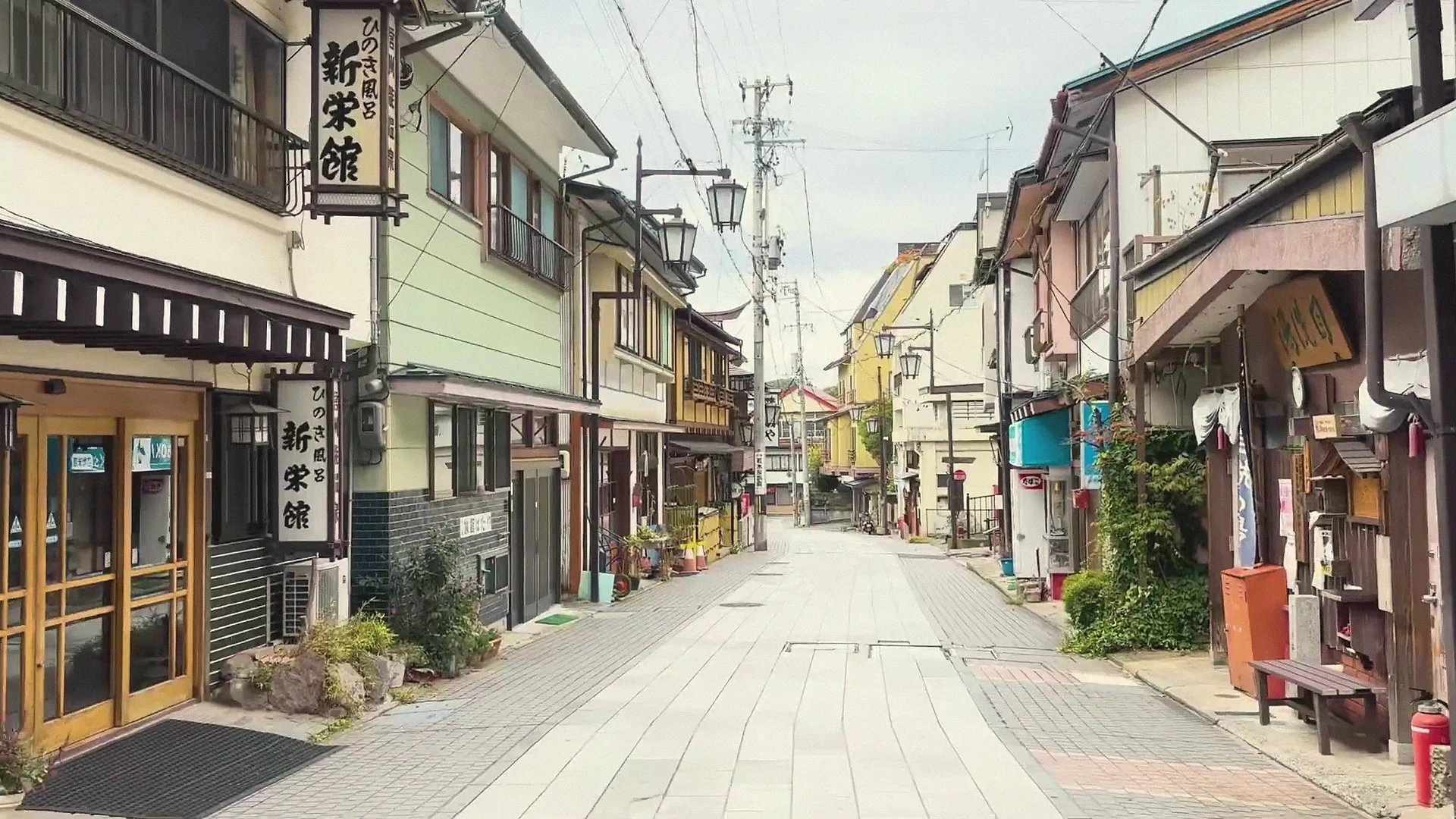
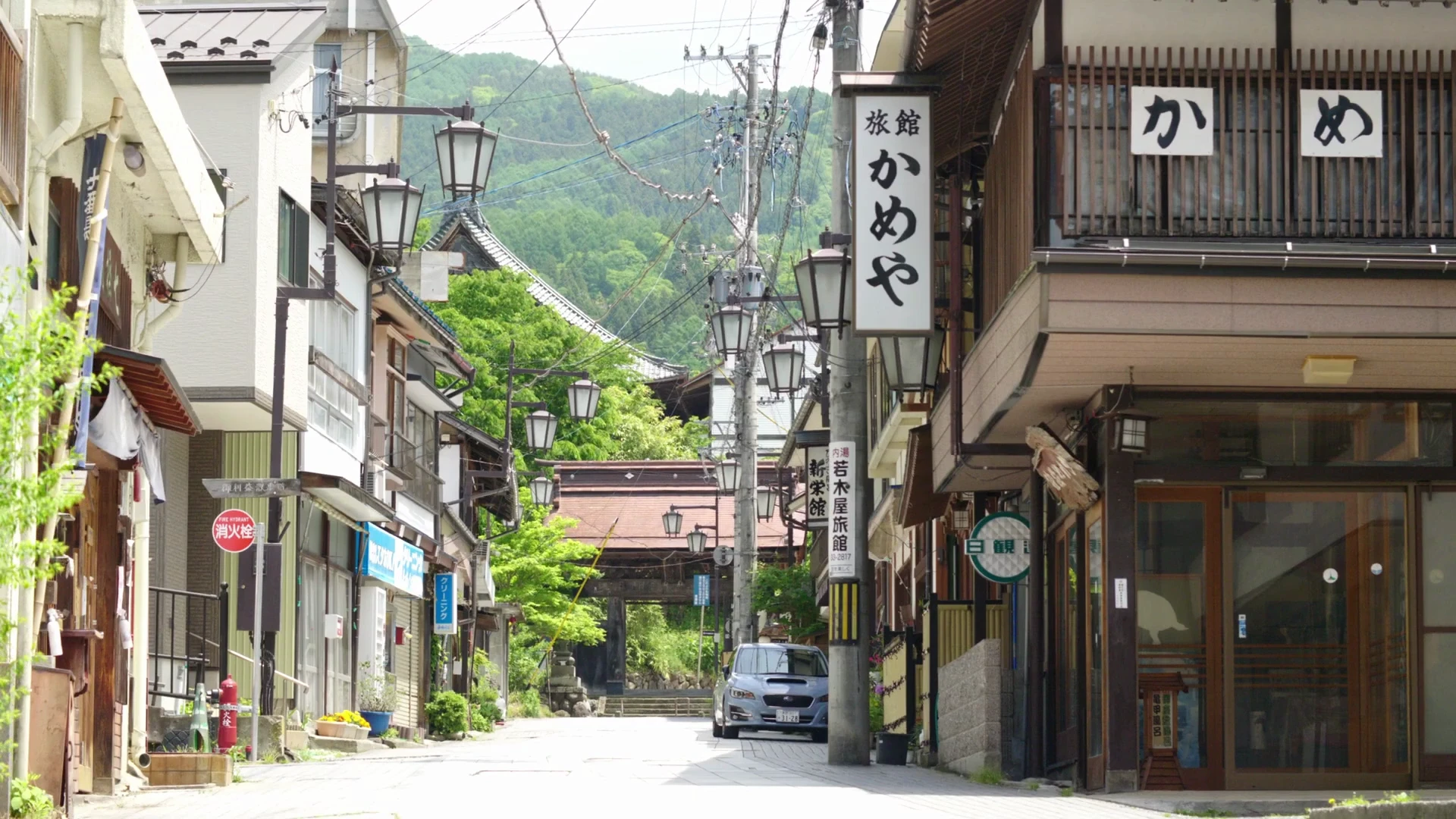
The village has kept its shape for centuries.
During the Edo period (1603–1868), the village developed into a recognized rest stop along mountain travel routes. Regional lords and samurai frequented the springs for their therapeutic reputation, and the ryokan that line the streets today trace their origins to this era. Several families have operated their inns continuously for eight or more generations. The architecture reflects that continuity. Many buildings retain their original timber frames, latticed windows, and tile roofs, maintained and repaired across centuries rather than replaced.
Unlike hot spring towns elsewhere in Japan that were heavily modernized during the postwar economic boom, Shibu Onsen largely avoided large-scale redevelopment. No major resort hotels went up. No wide roads were cut through the center. The result is a village that looks and feels closer to the Edo and Meiji periods than to the present day. Walking its streets after dark, with steam rising from the ground and lanterns marking the way, you are seeing something very near to what travelers would have encountered here two hundred years ago.
The Atmosphere of the Town
Shibu Onsen occupies a single narrow valley, and the entire village can be crossed on foot in under ten minutes. That compactness is part of its character. The main street follows the Yokoyu River, with ryokan and small shops pressed together on both sides. Side alleys branch off at intervals, each one revealing another row of traditional buildings, another curl of steam, another lantern-lit doorway.
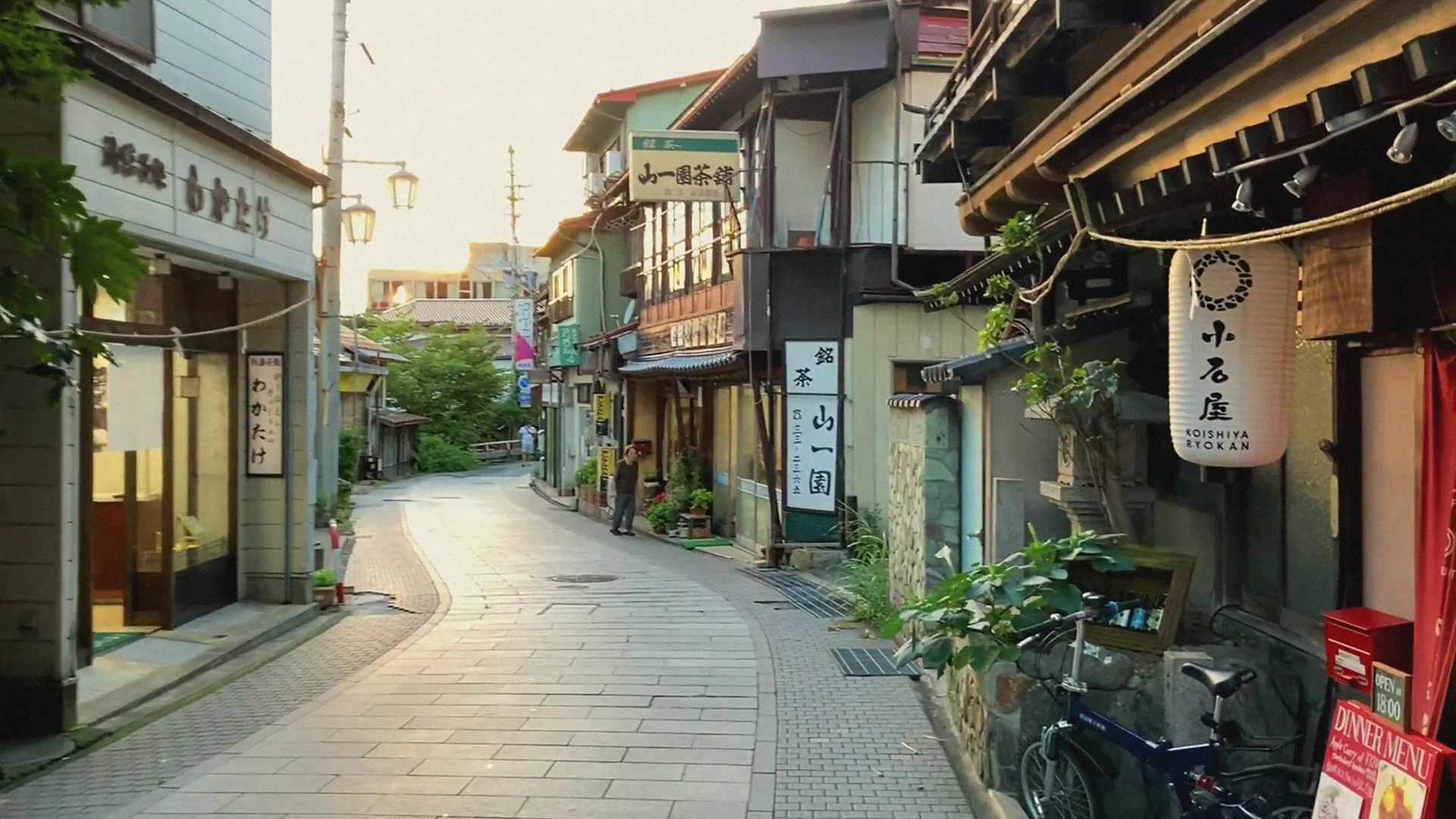
Wooden inns line the lane, mostly unchanged.
The architecture is almost entirely traditional Japanese wood construction: dark timber facades, sliding shoji screens, tiled roofs, and recessed entryways. Very few modern structures interrupt the visual continuity. At night, when paper lanterns are lit and guests in colorful yukata robes wander the lanes between bathhouses, the village takes on a quality that feels suspended between centuries.
There are a handful of small shops selling local crafts, snacks, and souvenirs, but Shibu Onsen is not a shopping destination. There are no convenience stores within the village center, no chain restaurants, no neon signage. A few vending machines and a small number of independent restaurants and cafes supplement the meals served at the ryokan. The village is, above all, a place for bathing, walking, and stillness.
The Nine Public Bathhouses
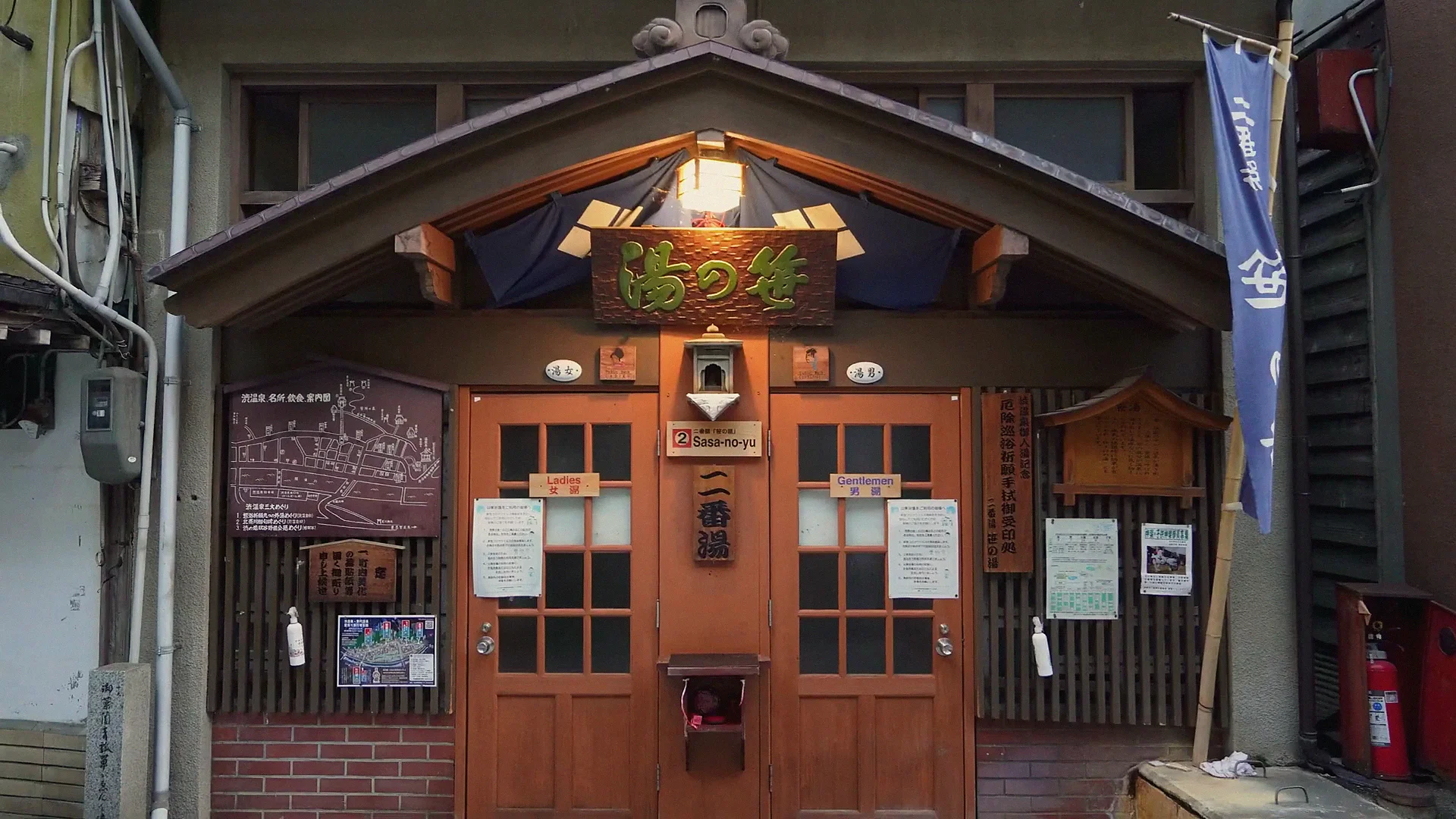
Shibu Onsen's most distinctive feature is its system of nine public bathhouses, known collectively as the sotoyu. Each bathhouse draws from a separate natural hot spring source, and each has its own mineral composition, temperature, and traditional health association. The structures themselves are small and plain: simple wooden buildings containing a single soaking pool, a washing area, and little else. That simplicity is deliberate. These are functional baths in the oldest tradition of Japanese onsen culture, not luxury spa facilities.
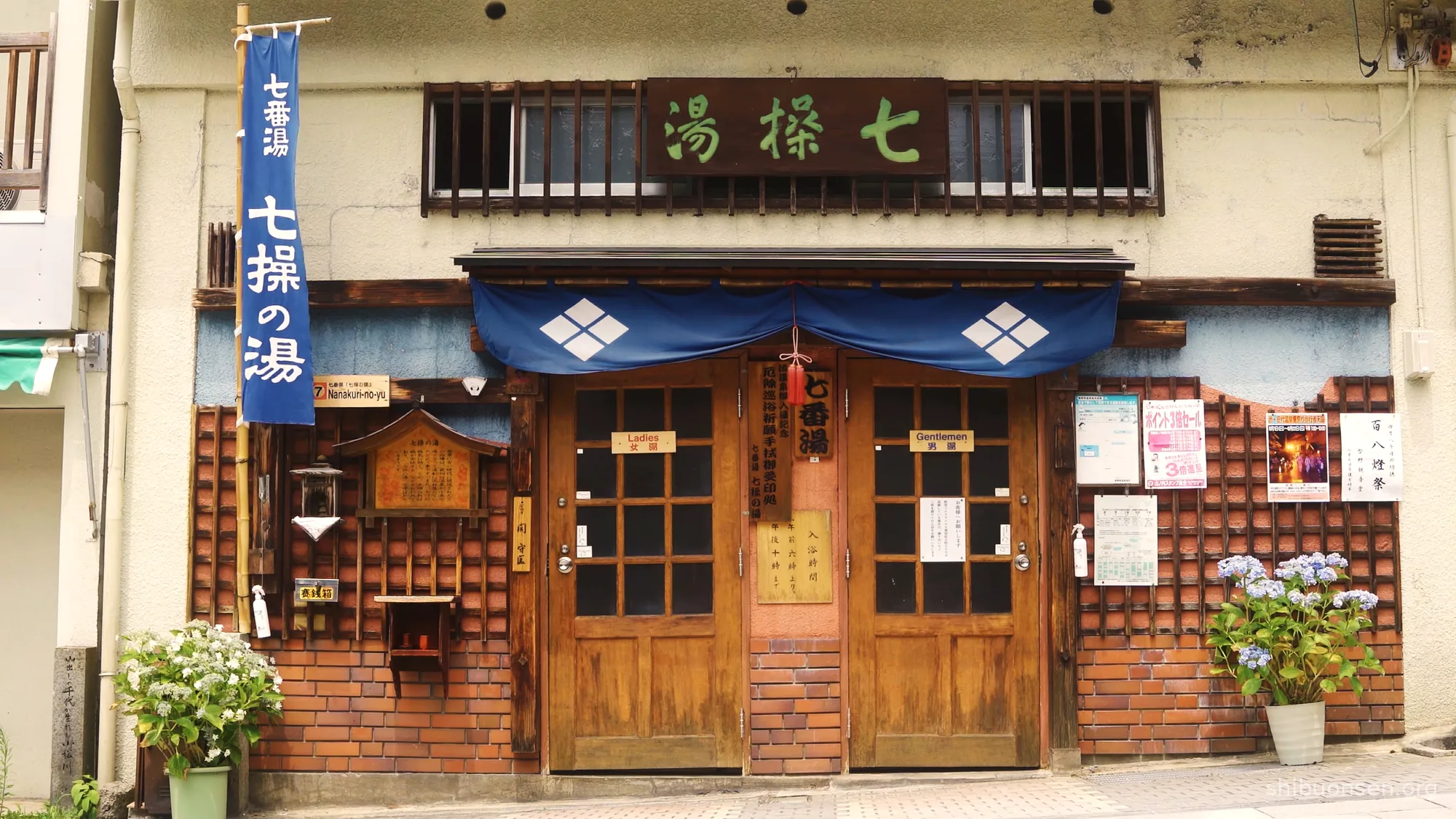
One of the nine sotoyu, open only to overnight guests.
The nine bathhouses and their traditional associations are:
First bathhouse (Hatsui no Yu) — gastrointestinal health
Second bathhouse (Sasayu) — skin conditions
Third bathhouse (Wata no Yu) — skin ailments and cuts
Fourth bathhouse (Takenoyu) — relief from childhood illness
Fifth bathhouse (Matsu no Yu) — recovery from illness
Sixth bathhouse (Menyu) — eye ailments and beauty
Seventh bathhouse (Shichifuku no Yu) — general well-being
Eighth bathhouse (Kanman no Yu) — rheumatism and nervous conditions
Ninth bathhouse (Oyu) — the grandest of the nine; the only one open to all visitors
The first eight bathhouses are reserved exclusively for guests staying at participating ryokan in Shibu Onsen. The ninth, Oyu, is open to the general public for a small fee and serves as both a bathhouse and a gathering point for locals and visitors alike.
The sotoyu are communal and gender-separated but very small, most accommodating only three to five bathers at a time. If one is occupied, you move on and circle back later. Water temperatures vary between bathhouses, and some run quite hot. Test with your hand before stepping in.
How the Bathhouse Key System Works
When you check into a participating ryokan, you receive a small wooden key alongside your room key. This single key opens all nine sotoyu bathhouses. The tradition is to visit each one over the course of your stay, collecting a stamp at each stop on a small cotton towel (tenugui) provided by your inn. Completing all nine is treated as a kind of lighthearted pilgrimage, not solemn, but satisfying.
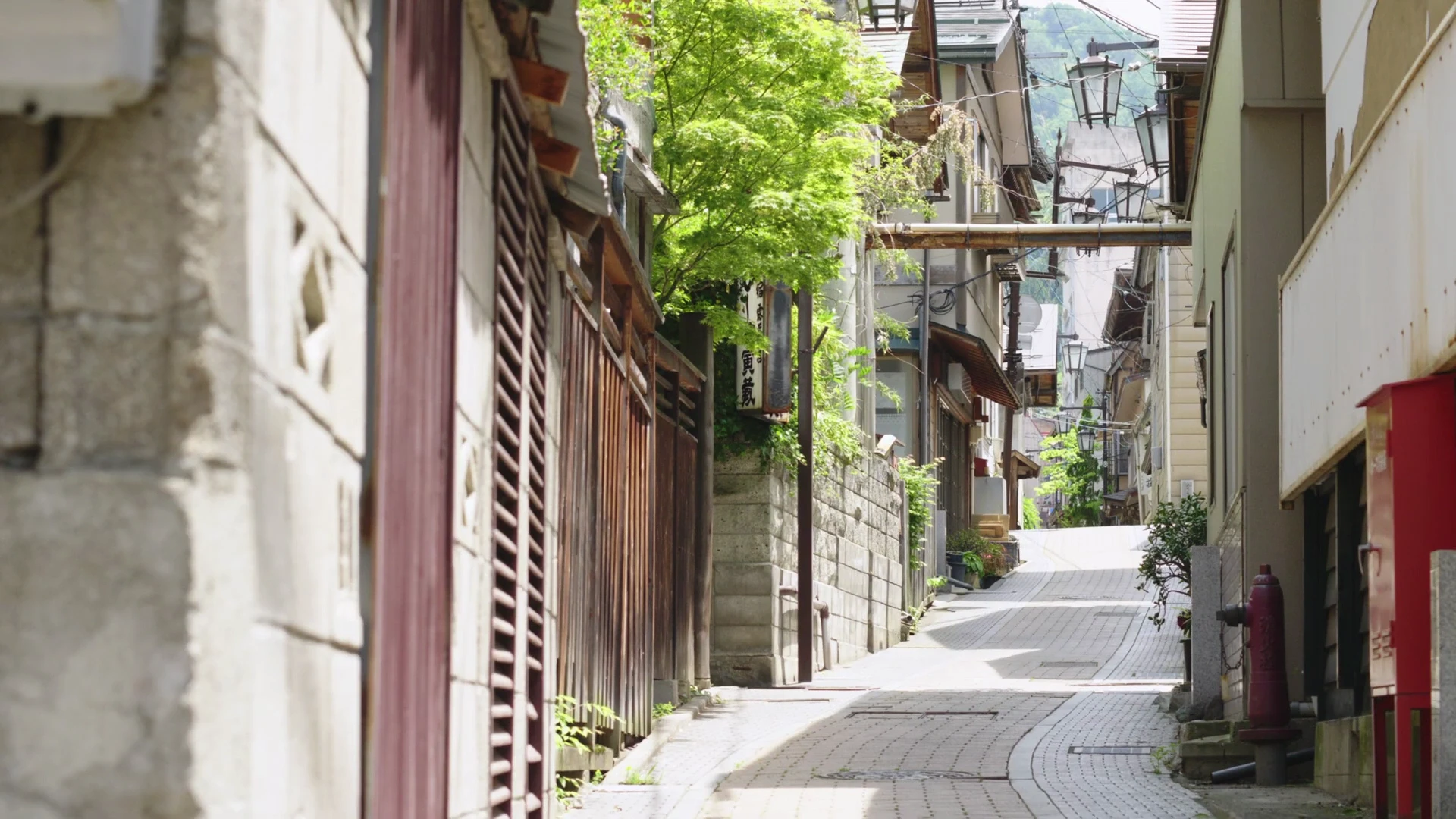
The wooden key opens every door on this lane.
The ritual works best in the evening, after dinner. Guests change into the yukata and wooden geta sandals provided by their ryokan and set out into the village, towel over one shoulder, key in hand. You move from bathhouse to bathhouse at your own pace, soaking for as long or as briefly as you like. The walks between baths are short (the entire village spans only a few hundred meters), and the cold night air between soaks makes each new pool feel especially welcoming.
There is no required order for visiting the nine. Bathing etiquette follows standard Japanese onsen customs: wash thoroughly at the shower stations before entering the pool, do not bring your towel into the water, and keep your voice low. If you are unfamiliar with onsen etiquette, your ryokan staff will be happy to explain the basics. This is a common question from international visitors and not something to feel self-conscious about.
Connection to Jigokudani Monkey Park
Shibu Onsen sits approximately 2 km (1.2 miles) from the trailhead that leads to Jigokudani Monkey Park, making it the closest traditional accommodation to the snow monkeys. The walk from the village to the trailhead takes roughly 20 to 30 minutes on foot, or about five minutes by car or shuttle. Several ryokan offer complimentary transport to the trailhead, particularly during winter when the roads can be icy.
For visitors whose primary reason for traveling to the Yamanouchi area is the monkey park, this proximity is a real advantage. You can reach Jigokudani shortly after it opens in the morning, when crowds are thinnest and the snow monkeys are often most active in the hot spring. After your visit, the village is waiting: a hot bath, a quiet afternoon, a kaiseki dinner to close the day. The pairing of wildlife viewing and traditional onsen culture is what makes this area distinctive, and Shibu Onsen delivers both within walking distance.
Possible Inspiration for Spirited Away
Shibu Onsen is frequently cited as one of the inspirations for the bathhouse town in Hayao Miyazaki's acclaimed 2001 animated film Spirited Away. The visual parallels are easy to spot. The film's central setting, a sprawling, multi-story bathhouse surrounded by narrow lanes, warm lantern light, and drifting steam, shares a clear resemblance to Shibu Onsen's streetscape, particularly the facade of the historic Kanaguya ryokan with its stacked wooden balconies and traditional detailing.
At dusk the resemblance is hard to miss.
Studio Ghibli has never officially confirmed Shibu Onsen as an inspiration. Several other onsen towns across Japan make similar claims, including Dogo Onsen in Ehime Prefecture and Ginzan Onsen in Yamagata Prefecture. Miyazaki himself has said that the film's bathhouse draws on a composite of memories and impressions rather than any single location. The connection remains informal. But walking through Shibu Onsen at night, steam swirling under lantern light, the dark wooden facades rising on either side, the resemblance is hard to shake, and many visitors come here in part because of it.
What It Is Like to Stay in a Ryokan
A ryokan stay in Shibu Onsen follows the format that has defined traditional Japanese hospitality for centuries. If you have not stayed in a ryokan before, the experience will be unfamiliar in the best sense: structured, unhurried, and attentive to details that most modern hotels overlook entirely.
You are handed slippers and a yukata at the door.
Upon arrival, you are greeted at the entrance, shown to your room, and served green tea with a small sweet. Rooms are floored in tatami, woven straw mats that are firm underfoot and faintly fragrant. Furnishings are minimal: a low table, floor cushions, a scroll or flower arrangement in an alcove. Futon bedding is stored in closets during the day and laid out by staff while you are at dinner, transforming the living space into a bedroom.
Dinner is the centerpiece of the evening. Most ryokan in Shibu Onsen serve a multi-course kaiseki meal, a sequence of small, carefully prepared dishes that follow seasonal and regional traditions. Expect mountain vegetables, river fish, tofu, pickled preparations, rice, miso soup, and often Nagano's renowned soba noodles. The meal is served either in your room or in a communal dining area, depending on the inn. Breakfast the following morning is similarly traditional: grilled fish, rice, miso soup, pickled vegetables, egg, and an assortment of small side dishes.
Each ryokan has its own private onsen baths, separate from the public sotoyu. These range from modest indoor pools to handsome rotenburo, outdoor baths where you soak with views of the forested hillside or, in winter, falling snow. Some ryokan also offer kashikiri baths that can be reserved for private or family use, which is helpful for visitors unfamiliar or uncomfortable with communal bathing.
Check-in is typically between 3:00 PM and 5:00 PM, and check-out around 10:00 AM. The rhythm of the evening (bathing, dinner, the sotoyu circuit, then returning to find the futon prepared and the room quiet) is the heart of the ryokan experience. It is designed to slow you down, and it works.
Where to Stay in Shibu Onsen
Accommodation in Shibu Onsen is almost exclusively traditional ryokan, ranging from small, family-run inns with a handful of rooms to larger establishments with more extensive bathing facilities and garden grounds. There are no large modern hotels in the village.
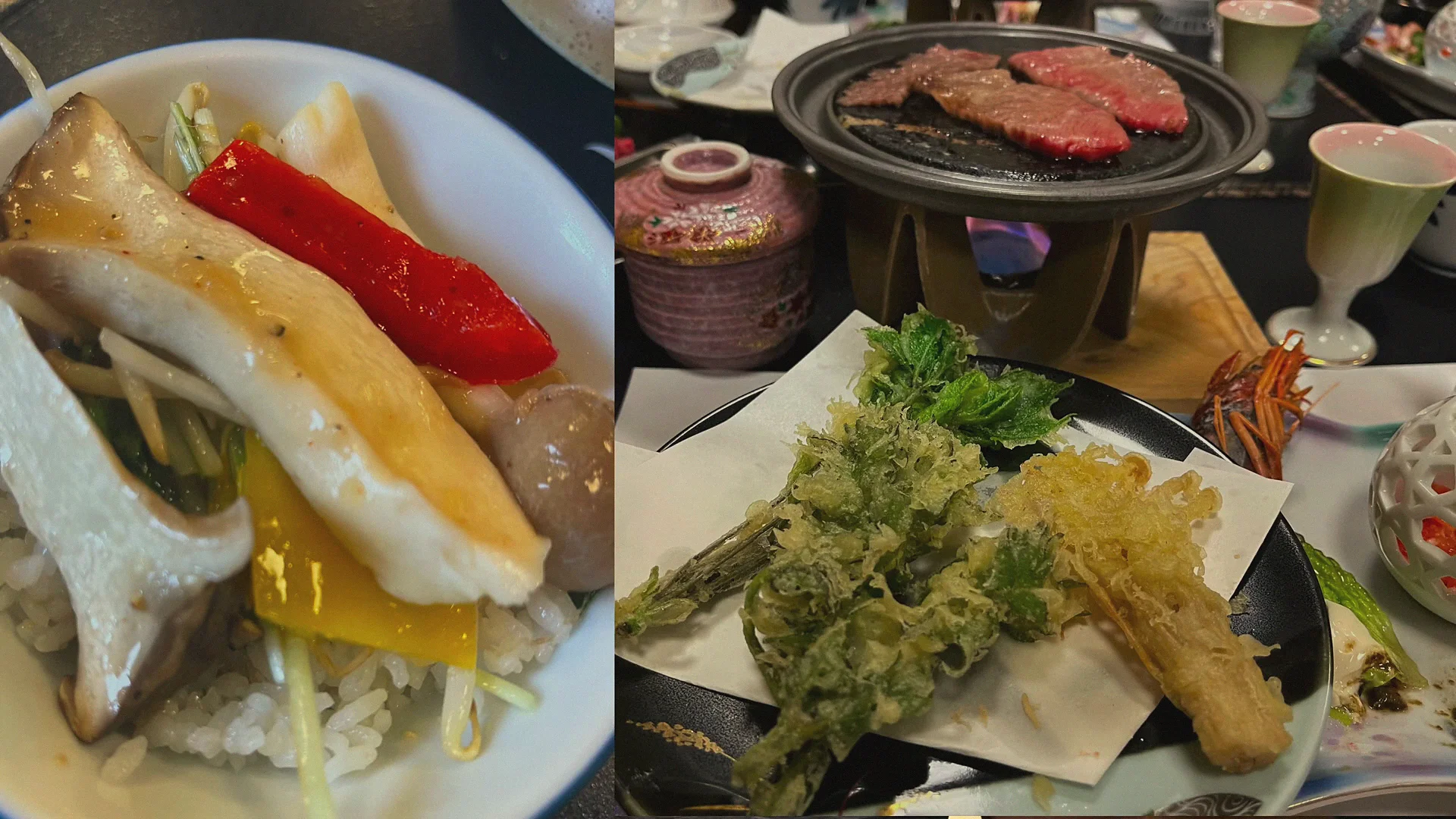
Dinner is usually included, and it is the point.
At the upper end, several ryokan operate as registered cultural properties, with architecture dating back centuries and baths fed by their own private spring sources. These tend to offer more refined kaiseki meals, larger rooms, and polished service, with nightly rates that reflect the quality. At the mid-range, a strong selection of smaller inns provides genuine traditional hospitality (tatami rooms, good food, access to the sotoyu key, and the same atmospheric village setting) at more accessible prices. A few budget-oriented options also participate in the bathhouse key system, making the core Shibu Onsen experience available at a range of price points.
Nightly rates typically fall between ¥12,000 and ¥35,000 per person (roughly $80–$240 USD), inclusive of dinner and breakfast. Prices rise during peak winter season and around Japanese holidays. Booking in advance is strongly recommended for stays between December and March, especially on weekends. For a broader comparison of accommodation options near the snow monkeys, including Yudanaka Onsen, see our Where to Stay guide.
How to Get to Shibu Onsen
Shibu Onsen is reached via Yudanaka Station, the terminus of the Nagano Dentetsu railway line. From Yudanaka, the village is about 2 km (1.2 miles) away: a short bus ride, a taxi, or a pickup arranged through your ryokan. For full transport details including routes from Kyoto and Osaka, see our How to Get There guide.
From Tokyo
Take the Hokuriku Shinkansen from Tokyo Station to Nagano Station (80–100 minutes, covered by the Japan Rail Pass). At Nagano, transfer to the Nagano Dentetsu railway to Yudanaka Station (45 minutes by limited express, 70 minutes by local train). The Nagano Dentetsu line is privately operated and not covered by the Japan Rail Pass; a one-way ticket costs approximately ¥1,200 (about $8 USD). From Yudanaka Station, take a local bus to Shibu Onsen (about 5 minutes) or arrange pickup with your ryokan. A taxi from the station costs roughly ¥1,000 (about $7 USD).
From Nagano
Follow the same Nagano Dentetsu route to Yudanaka described above. During peak winter season, a direct express bus sometimes operates between Nagano Station and the Shibu Onsen and Snow Monkey Park area. Check current schedules at the Nagano Station tourist information center.
From Yudanaka Station
The station is the end of the line and the main transit hub for the area. Shibu Onsen is a short ride away. Many ryokan offer complimentary pickup if you contact them before arrival; confirm this when you book. If walking, the route takes about 25 minutes along a quiet road.
Best Time to Visit Shibu Onsen
Shibu Onsen is open year-round, and each season offers a different character. The choice of when to visit depends largely on what you want from the trip. For a detailed seasonal breakdown focused on the snow monkeys, see our Best Time to Visit guide.
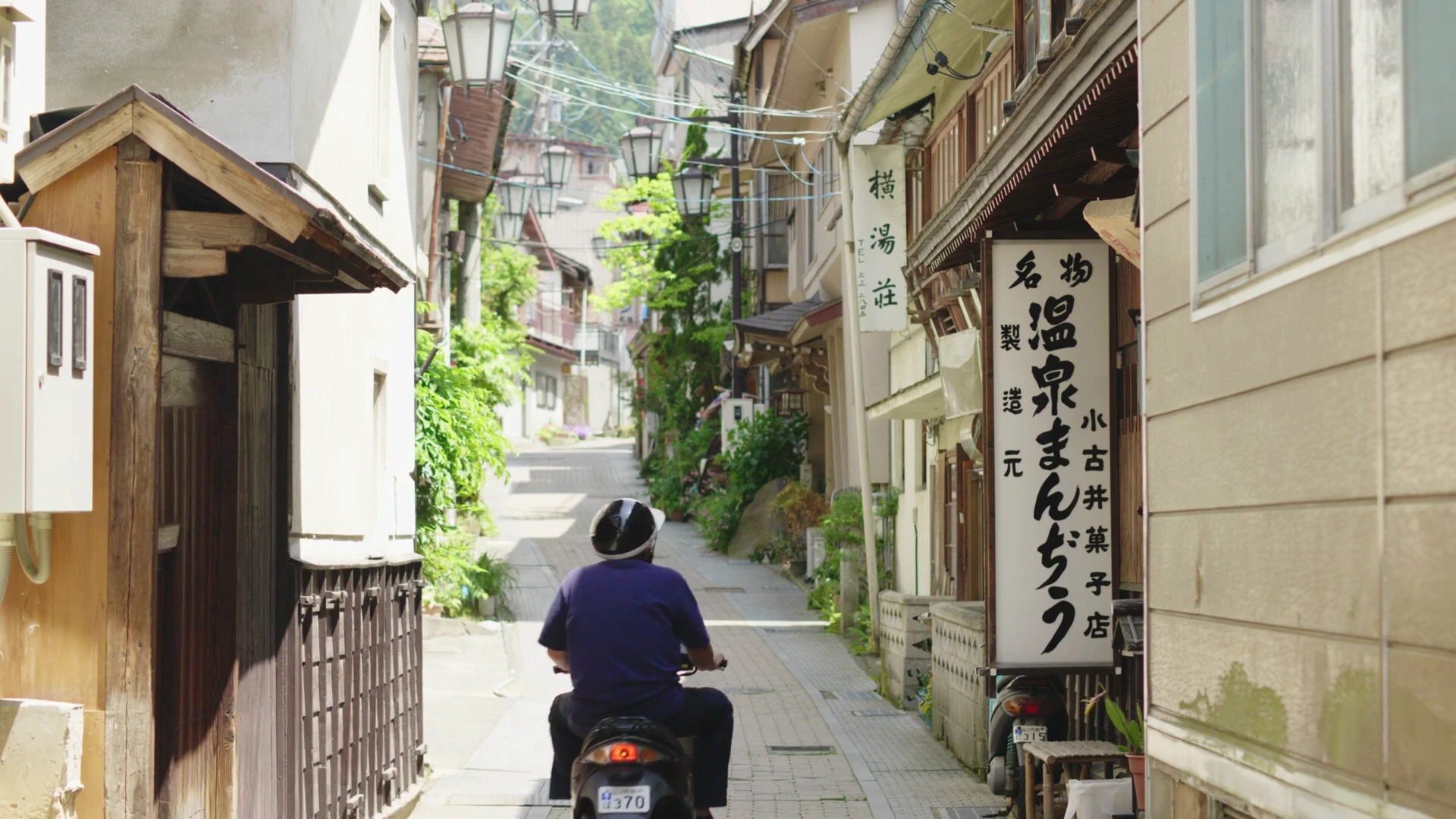
The lanes are walkable year round.
Winter (December–March) is the peak season, and for good reason. Snow covers the village rooftops and the surrounding mountains. The sotoyu baths feel most inviting when the air is coldest, and stepping between bathhouses through falling snow in a yukata is the defining Shibu Onsen experience. This is also when the snow monkeys at Jigokudani are most likely to be bathing in the hot spring. January and February offer the heaviest snowfall and the most dramatic atmosphere. This is the busiest period, and ryokan book up well in advance.
Spring (April–May) brings milder weather and far fewer visitors. Snow recedes from the lower elevations, and the village takes on a quieter, gentler character. The sotoyu remain open and pleasant to use. Cherry blossoms may appear at lower elevations in the wider Nagano region during April.
Summer (June–August) is the quietest season. The surrounding mountains are lush and green, and the valley is warm. Bathing in a hot spring on a summer evening is a different experience from winter, gentler and less dramatic, but still relaxing. The monkey park remains open, though the monkeys are unlikely to use the hot spring in warm weather.
Autumn (September–November) offers comfortable temperatures and the beginning of fall foliage in the surrounding hills. As nights grow cooler through October and November, the appeal of the hot springs strengthens. Visitor numbers remain modest compared to winter.
Tips for Visiting Shibu Onsen
Learn basic onsen etiquette before you arrive. Wash your body at the shower stations before entering any pool. Do not bring your towel into the water. Keep your voice low. These customs are taken seriously and are not difficult to follow. Your ryokan staff can walk you through the basics if you are unsure.
Wear the yukata and geta your ryokan provides. Walking the village streets in a yukata is standard practice, not a costume. It is part of the experience and entirely expected.
Carry cash. Most ryokan accept credit cards for room charges, but the sotoyu bathhouses, vending machines, and small village shops are cash-only.
Book early for winter. The period from late December through February fills quickly, especially weekends and holidays. Reserving two to three months ahead is advisable.
Allow at least one full night. A day visit to Shibu Onsen is possible but misses the point. The sotoyu circuit, the kaiseki dinner, and the evening atmosphere all require staying overnight. Two nights is better if your schedule allows, giving you time to visit the monkey park at a relaxed pace and complete the full bathhouse round without rushing.
Combine with a morning visit to the monkey park. Walk or shuttle to the Jigokudani trailhead early, spend an hour or two with the snow monkeys, and return to the village for a bath and late breakfast. This is the most rewarding daily rhythm the area offers.
Bring minimal luggage. The village is compact and walkable, but lanes are narrow and sometimes steep. A single bag or backpack is easier to manage than a large rolling suitcase, especially in winter when paths may be icy.
Respect the quiet. Shibu Onsen is a residential village as well as a tourist destination. Many ryokan operators live in their buildings. Keep noise down, especially late at night.
Check for bathhouse closures. Individual sotoyu occasionally close for maintenance. Your ryokan can advise which are open during your stay.
Why Staying Overnight Near the Snow Monkeys Is Worth It
A day trip to the snow monkeys from Tokyo or Nagano is entirely possible, and many visitors do it. But an overnight stay in Shibu Onsen changes the nature of the experience in ways that are hard to quantify and easy to feel.
The practical advantages are straightforward. Staying in the village puts you within walking distance of the Jigokudani trailhead, which means you can reach the monkey park shortly after it opens, before the day-trip crowds arrive, when the morning air is coldest and the monkeys are most likely to be soaking in the hot spring. That first hour of quiet at the park, with steam rising from the pool and snow on the ground, is worth the price of a ryokan stay on its own.
But the deeper value is cultural. A ryokan dinner, a soak in a centuries-old bathhouse, an evening walk through lantern-lit streets in a cotton robe: these are not add-ons to the monkey park visit. They are the other half of the experience. The Yamanouchi area offers something increasingly rare in Japan: a rural mountain community where traditional onsen culture is not preserved as a museum piece but practiced as daily life. Staying overnight lets you participate in that, not just observe it.
There is also a resonance in the parallel. You spend a morning watching wild monkeys seek warmth in a volcanic hot spring pool. You spend the evening doing the same thing yourself, a few kilometers down the valley, in water drawn from the same geothermal source. The connection is not metaphorical. It is literal. You and the macaques are doing the same thing, for the same reason, in the same mountain landscape. That overlap stays with you.
Summary
Shibu Onsen is one of Japan's oldest continuously operating hot spring villages, a place where bathing culture stretching back more than 1,300 years is not just remembered but still practiced every evening. Its nine public bathhouses, its wooden ryokan, its stone streets and paper lanterns preserve a traditional atmosphere that few communities in Japan can still claim.
For visitors traveling to Nagano Prefecture to see the snow monkeys at Jigokudani, Shibu Onsen is the most rewarding place to spend the night. The monkey park is a short walk or shuttle ride away. The ryokan provide multi-course meals, private baths, and a rhythm of life calibrated to rest rather than activity. Evening in the village, moving from bathhouse to bathhouse in a yukata under cold mountain air, wooden key in hand, is the kind of experience that defines a trip to Japan long after the details of other destinations fade.
Come prepared to slow down, soak often, and appreciate a place that has been doing exactly this for over a thousand years.
Practical information including prices, hours, and transportation schedules is subject to change. Confirm current details with your ryokan or the Yamanouchi tourism office before your visit. Information in this guide reflects conditions as of April 2026.
Where it is
Frequently asked questions
How far is Shibu Onsen from the snow monkeys?
What are the nine public bathhouses?
Is it worth staying overnight in Shibu Onsen?

Verified by The Japan Onsen Society
1. 山ノ内町役場 (Yamanouchi Town official onsen list) — Municipal record: park access, walking times, climate and setting.
2. Go! NAGANO (Nagano Prefecture Tourism) — Prefectural official guide: access legs, hours, area detail.
3. 地獄谷野猿公苑【公式】 (Jigokudani Monkey Park, official) — The park's official account: opened 1964, elevation, bathing behavior, admission, conduct.
4. 長野電鉄 (Nagano Electric Railway) — Railway official: Snow Monkey Pass, fares, ticketing.
Verified July 7–16, 2026
Related guides
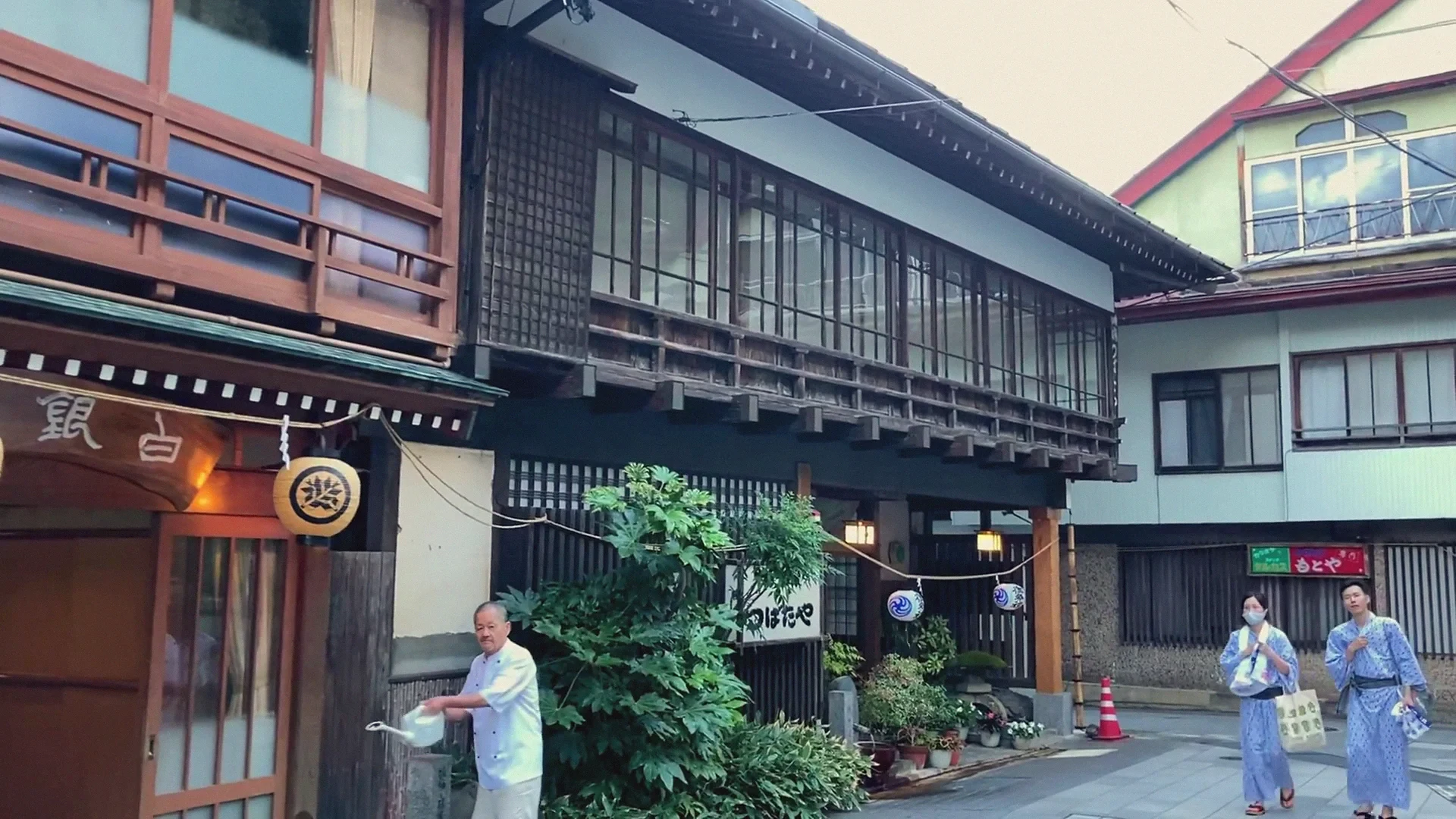
Where to Stay
Budget Ryokan
A night near the monkeys does not require a kaiseki budget. Yudanaka and Shibu Onsen have modest family-run ryokan and guesthouses where the same mineral water fills the baths at a fraction of the price.
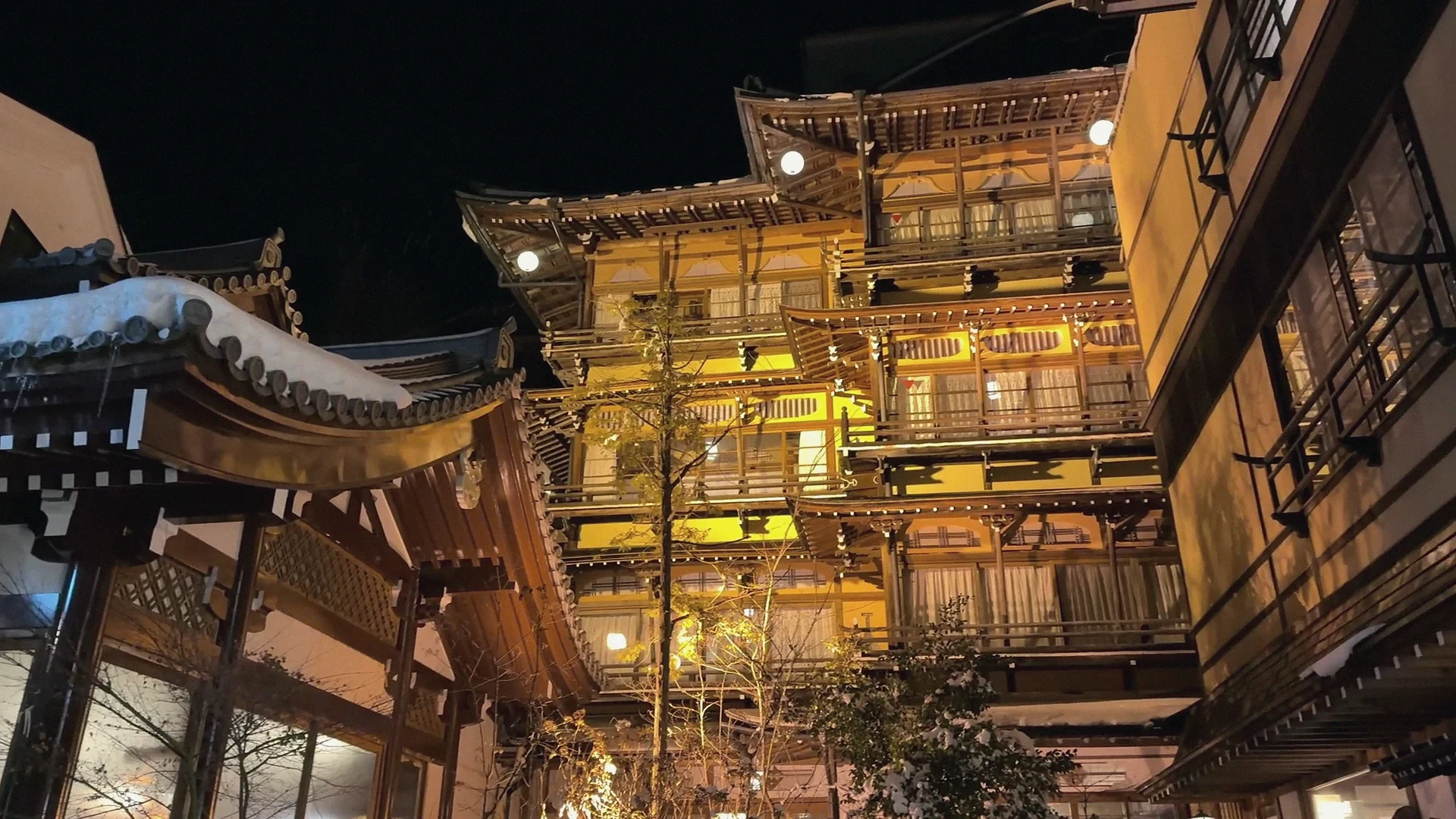
Where to Stay
Luxury Ryokan Nagano
The luxury version of a snow monkey trip is a fine ryokan night: a room with a private open-air bath, a multi-course kaiseki dinner, and the park at opening the next morning — rural Japan at its most polished.

Where to Stay
Tattoo Friendly Onsen
Japan's onsen tattoo taboo is real but navigable. Around the Snow Monkey Park, your best tools are ryokan with private or reservable baths, Shibu Onsen's guest-key bathhouses, and a polite question at check-in.