Where to Stay Near Snow Monkey Park
Shibu, Yudanaka, or Nagano city. Where to sleep, and why.
On this page
Introduction
Choosing where to stay is one of the most important decisions you will make when planning a visit to Jigokudani Monkey Park. The park itself sits in a mountain valley in Nagano Prefecture with no accommodation at the site. Visitors walk in on a forest trail and walk out again, so your base determines how your mornings, evenings, and overall experience take shape.
The three realistic options are Shibu Onsen, Yudanaka Onsen, and Nagano city. The first two are traditional hot spring villages within a few kilometers of the monkey park trailhead, offering ryokan stays with meals, onsen bathing, and immediate access to the snow monkeys. Nagano city, about 40 minutes away by train, works as a base for day trips and offers more familiar hotel-style accommodation. Each suits a different type of traveler, and none is a wrong choice, but the differences are worth understanding before you book.
Quick Answer: Where Should You Stay to Visit the Snow Monkeys?
For the best overall experience: Stay overnight in Shibu Onsen or Yudanaka Onsen. Both are close to the park, both offer traditional ryokan accommodation with hot spring bathing, and both allow you to reach the snow monkeys early in the morning, the best time to visit.
Shibu Onsen is the more atmospheric choice: a centuries-old village with stone streets, wooden ryokan, and nine public bathhouses you can visit with a wooden key from your inn. It sits closer to the monkey park trailhead and rewards travelers who value cultural depth and traditional atmosphere.
Yudanaka Onsen is the more convenient choice: it has the railway station, a wider range of accommodation including modern hotels, and a few independent restaurants. It suits travelers who prioritize easy logistics and flexible options.
Nagano city works for day-trippers or travelers who want to combine the monkey park with other Nagano attractions. You sacrifice the early morning access and the ryokan experience, but gain a larger city with more dining, shopping, and accommodation options.
Overview of Accommodation Options Near Jigokudani Monkey Park
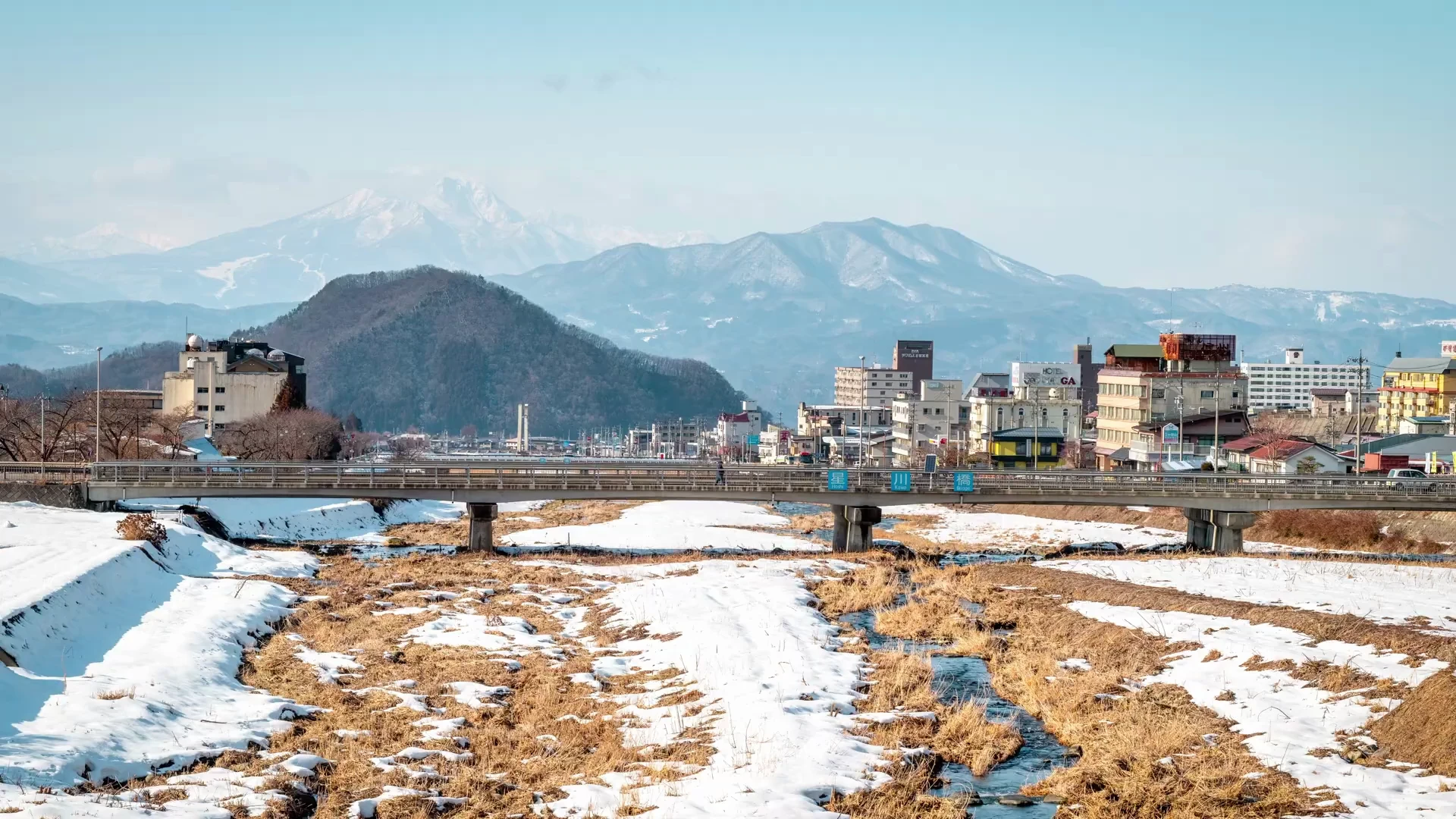
The Yamanouchi area, the rural mountain district where the snow monkeys live, is not a major tourist hub in the conventional sense. There are no large resort hotels, no international chains, and no hostels in the immediate vicinity of the park. What you find instead is a landscape of traditional Japanese hospitality: ryokan (inns) built around natural hot springs, most of them family-operated, most of them including dinner and breakfast at the nightly rate.
Three bases, all within a short ride of the park.
This is part of the appeal. Staying near the snow monkeys means staying in an onsen town, and the onsen town experience (bathing in mineral water, eating kaiseki dinners, sleeping on tatami floors) is as much a reason to visit as the monkeys themselves. For many travelers, particularly those visiting Japan for the first time, the ryokan stay turns out to be the most memorable part of the trip.
That said, the accommodation landscape has broadened in recent years. Alongside the traditional ryokan, a handful of modern hotels, updated inns with Western-style beds, and budget guesthouses now operate in the area. You are not locked into a single type of stay, even if ryokan remains the dominant and most rewarding option.
Shibu Onsen: The Most Atmospheric Place to Stay
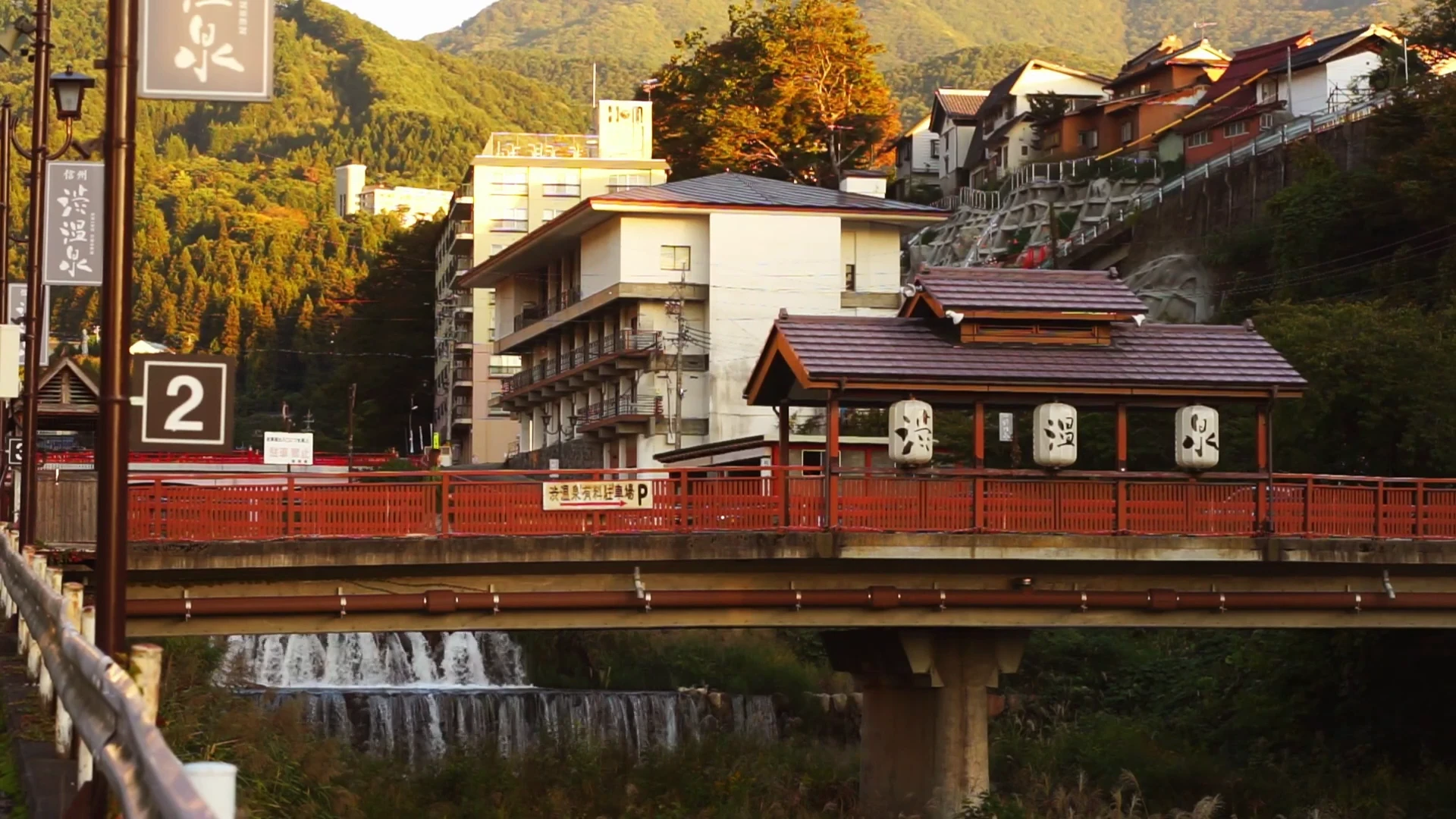
Shibu Onsen is a small village of stone-paved lanes, weathered wooden ryokan, and rising steam, set in a narrow valley about 2 km (1.2 miles) from the monkey park trailhead. It has been a bathing destination for over 1,300 years, and remarkably little about its physical character has changed. The architecture is almost entirely traditional. Paper lanterns light the streets after dark. The sound of running water, from the river, from hot spring pipes, from bathhouse drains, is constant.
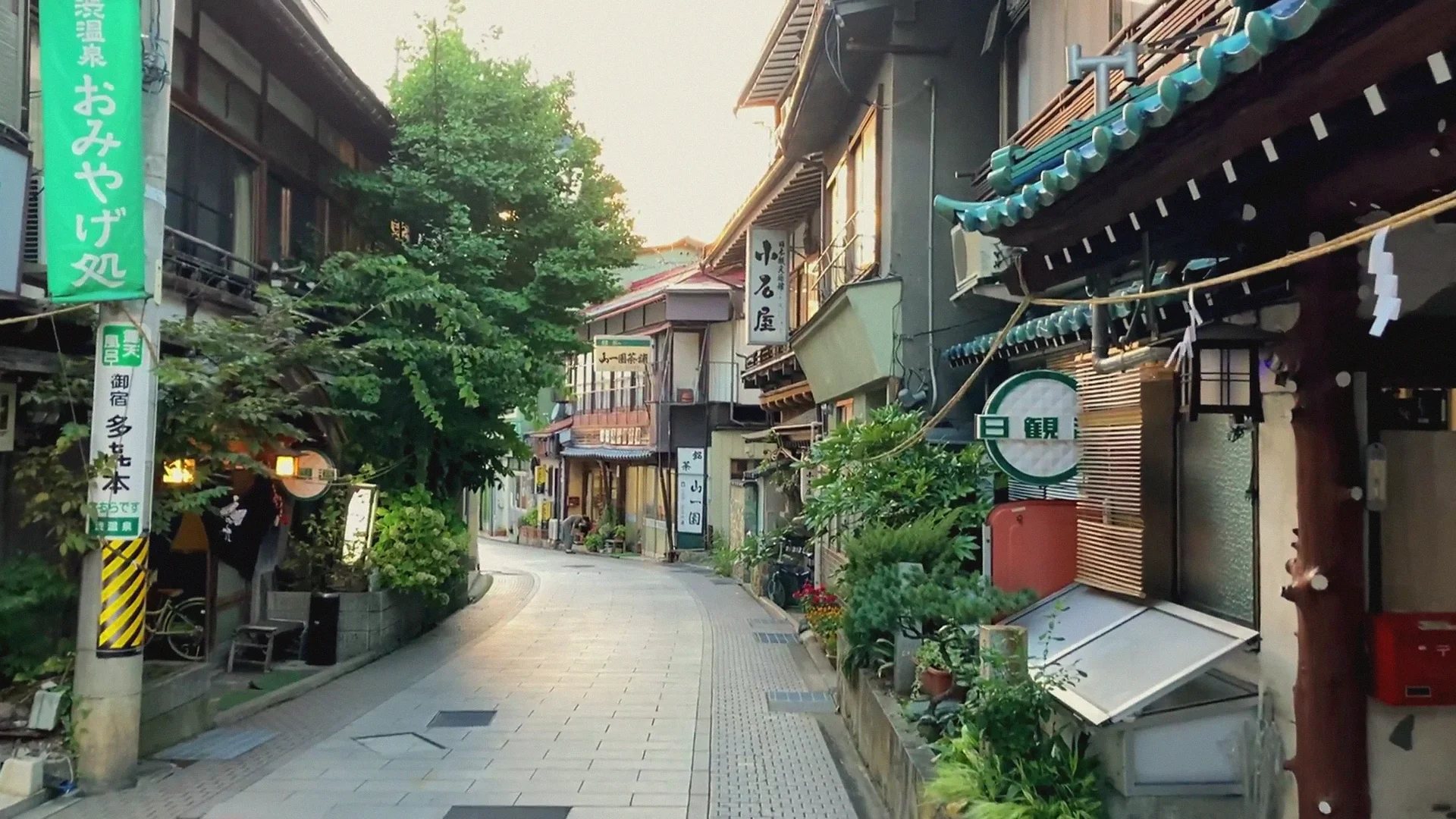
Shibu trades convenience for atmosphere.
The village's signature feature is its system of nine public bathhouses (sotoyu), each fed by a different mineral spring. Guests at participating ryokan receive a wooden key that unlocks all nine, and the evening tradition of walking from bath to bath in a yukata and wooden sandals is one of the defining experiences of staying here. For a complete guide to the village, see our Shibu Onsen Guide.
Shibu sits slightly closer to the monkey park trailhead than Yudanaka, about 20–30 minutes on foot or five minutes by car or shuttle. Several ryokan offer transport to the trailhead, especially during winter. The village has very few restaurants or shops outside the ryokan, so plan to eat at your inn. This is not a limitation so much as a reflection of how the village works: the ryokan provides everything you need, and the streets are for bathing and walking, not commerce.
Shibu Onsen is also frequently mentioned as a possible inspiration for the bathhouse town in Hayao Miyazaki's Spirited Away, though the connection has never been officially confirmed.
Who Shibu is best for: Travelers who prioritize atmosphere and cultural immersion. Couples. Photographers. Repeat visitors to Japan looking for something distinctive. Anyone who considers the onsen experience as important as the monkey park visit.
Yudanaka Onsen: The Most Convenient Base
Yudanaka Onsen sits at the terminus of the Nagano Dentetsu railway, making it the first place you arrive and the most logistically straightforward base for visiting the snow monkeys. The town is larger and more mixed than Shibu, with traditional ryokan alongside modern hotels, a few independent restaurants near the station, and a generally more accessible feel. For a full overview, see our Yudanaka Onsen Guide.
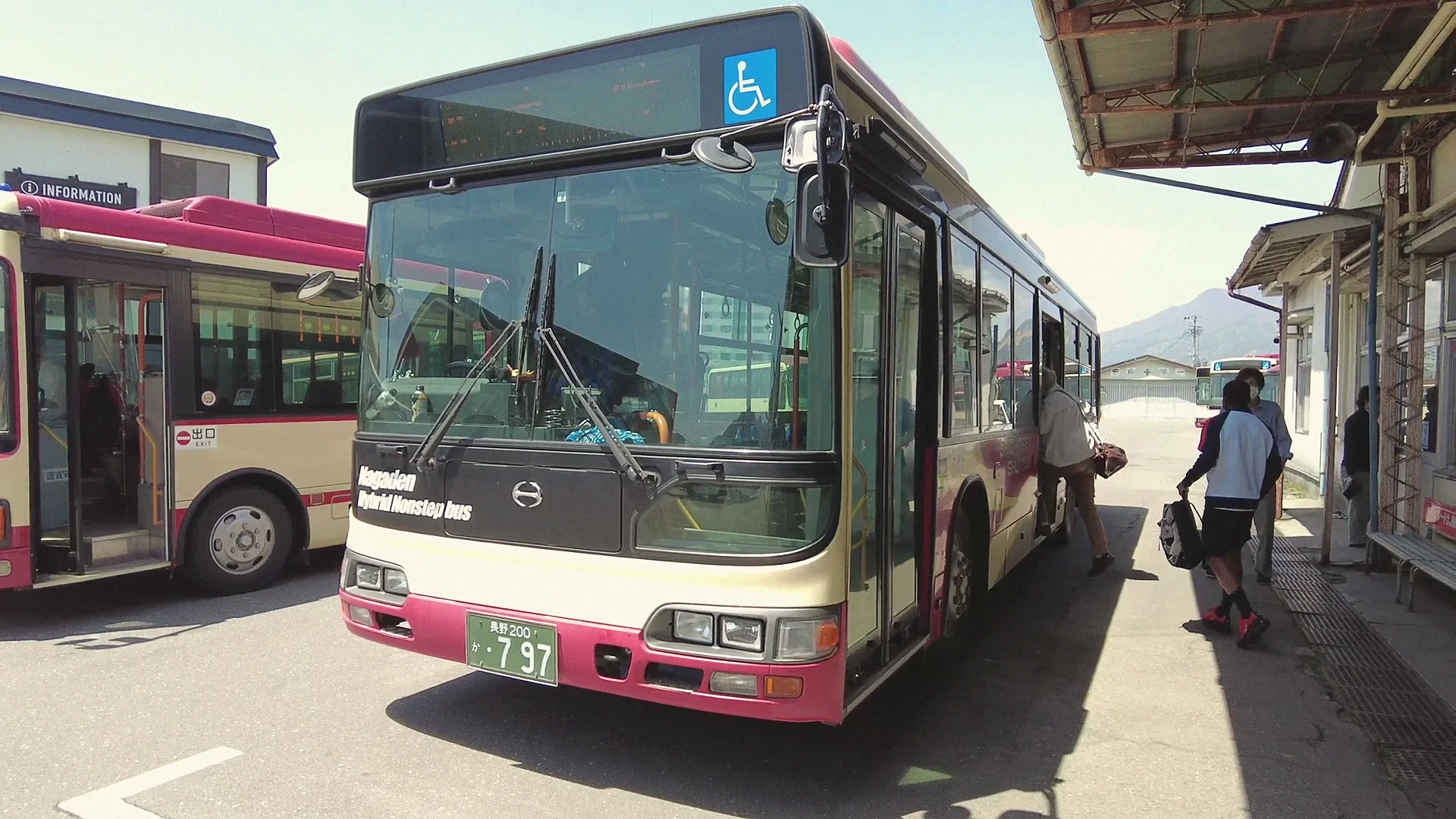
Yudanaka trades atmosphere for the bus stop.
The monkey park trailhead is about 4 km (2.5 miles) from Yudanaka by road, roughly 10–15 minutes by bus or taxi. Many ryokan offer shuttle service. The extra distance compared to Shibu Onsen is marginal in practice and is offset by the convenience of stepping off the train and walking directly to your accommodation without a secondary transfer.
Yudanaka has its own hot springs and public baths, including a free foot bath at the station. The ryokan here offer in-house onsen bathing that is every bit as good as what you find in Shibu. What Yudanaka lacks is the concentrated, atmospheric streetscape that makes Shibu feel like a step back in time. The trade-off is more options, more flexibility, and simpler logistics.
Who Yudanaka is best for: First-time visitors to Japan who want a smooth, easy experience. Travelers arriving with heavy luggage. Budget-conscious visitors who want more accommodation choices. Anyone who values having a few restaurant options beyond the ryokan.
Nagano City: A Good Base for Day Trips
Nagano city is the prefectural capital, a mid-sized city with a full range of hotels, restaurants, and urban amenities. It sits about 40 minutes from Yudanaka by the Nagano Dentetsu railway and roughly three hours from Tokyo by shinkansen. Staying in Nagano makes sense in specific circumstances, even though it means sacrificing the early morning advantage and the ryokan experience near the park.
Nagano works best for travelers who are visiting the snow monkeys as part of a broader Nagano itinerary, combining the monkey park with Zenkō-ji temple, the city's soba noodle culture, skiing at nearby resorts, or other regional attractions. It also suits travelers who prefer conventional hotels with familiar amenities, or those on a tighter budget who find city accommodation more affordable than ryokan rates in the onsen towns.
The day-trip logistics from Nagano are manageable. An early departure on the Nagano Dentetsu line, followed by a bus and the forest walk, puts you at the monkey park by mid-morning. You can return to Nagano by mid-afternoon with time for sightseeing or dinner in the city. During peak winter season, a direct express bus sometimes runs from Nagano Station to the monkey park area, simplifying the journey further.
The drawback is real, though. Staying in Nagano means you cannot reach the park at opening time, because the earliest train does not arrive early enough to beat the morning rush. You also miss the evening onsen experience and the traditional kaiseki dinner that make an overnight stay in the Yamanouchi area so distinctive. For most visitors whose primary purpose is the snow monkeys, the onsen towns are the better choice.
Who Nagano city is best for: Day-trippers. Urban travelers who prefer hotel-style accommodation. Visitors combining multiple Nagano-area activities. Travelers on a budget who find ryokan rates too high.
Google Maps — Nagano Station: https://maps.google.com/?q=Nagano+Station
What It Is Like to Stay in a Ryokan
For visitors who have never experienced a traditional Japanese inn, a ryokan stay in the Yamanouchi area is an immersion in a hospitality culture that has been refined over centuries.
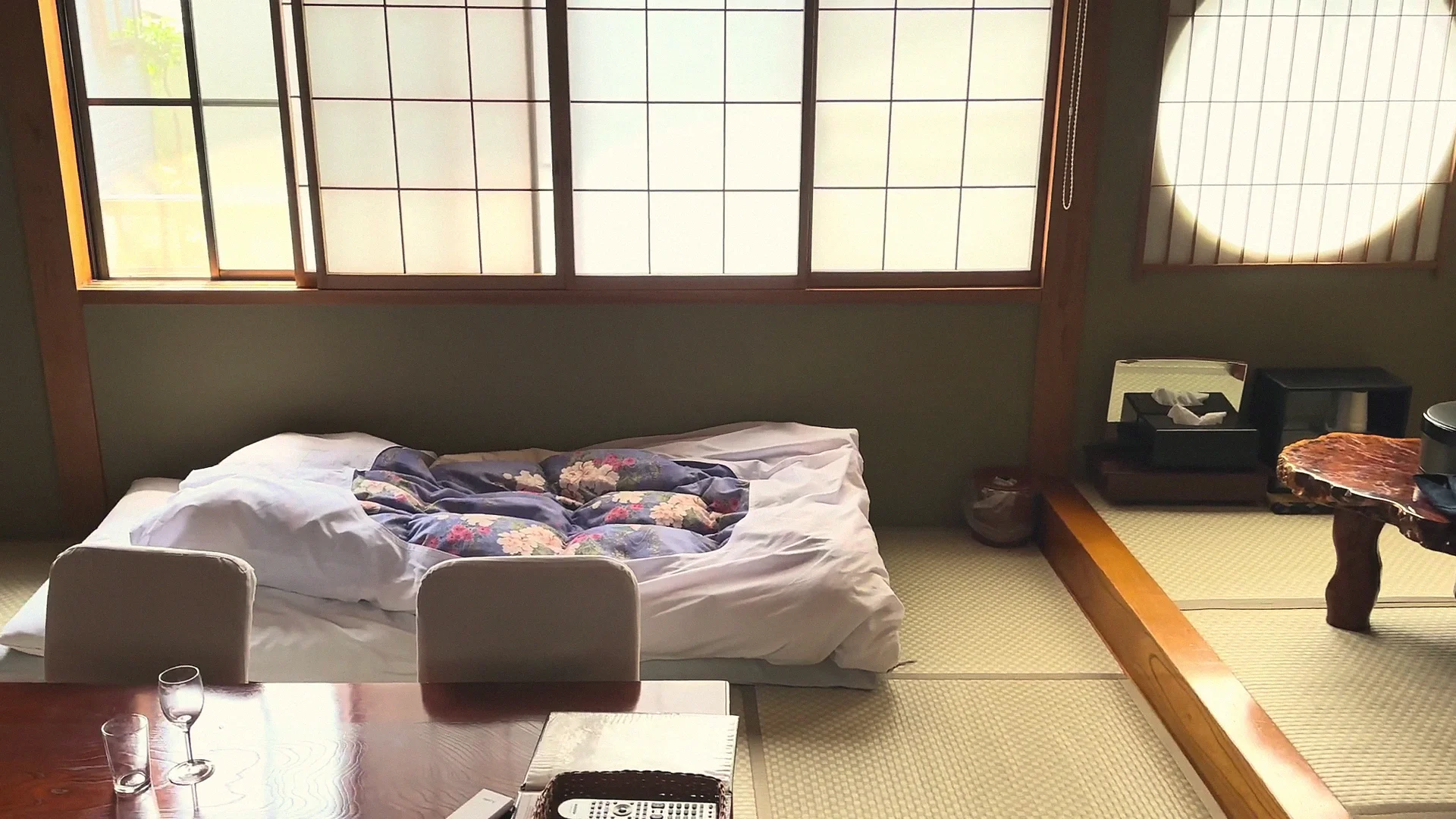
The futon is laid out while you are at dinner.
Rooms are floored in tatami (woven straw mats) and furnished simply: a low table, floor cushions, a scroll or flower arrangement in an alcove. Futon bedding is stored during the day and laid out by staff while you are at dinner. Some ryokan now offer rooms with Western-style beds for travelers who find futons uncomfortable. Ask when booking if this matters to you.
Dinner is typically a multi-course kaiseki meal, a procession of small, beautifully prepared dishes reflecting the season and the region. Mountain vegetables, river fish, tofu, pickled preparations, miso soup, rice, and Nagano's celebrated soba noodles appear regularly. Breakfast the following morning is a traditional Japanese spread: grilled fish, rice, miso, egg, pickles, and side dishes.
Each ryokan has its own hot spring baths, indoor pools, outdoor rotenburo, or both. Bathing is communal and gender-separated, following standard onsen etiquette: wash thoroughly before entering the pool, keep towels out of the water, be quiet. Some ryokan offer kashikiri (private-use) baths that can be reserved for families or individuals uncomfortable with communal bathing.
The rhythm of the evening (arrive, bathe, dine, walk the town, bathe again, sleep) is unhurried by design. A ryokan stay is structured around rest, and the best approach is to surrender to the pace rather than fight it.
Types of Accommodation Near the Snow Monkey Park
Traditional ryokan remain the dominant and most characteristic accommodation type. These range from intimate, family-run inns with five or six rooms to larger establishments with extensive bathing facilities and polished service. Rates typically include dinner and breakfast. This is the quintessential Yamanouchi experience.
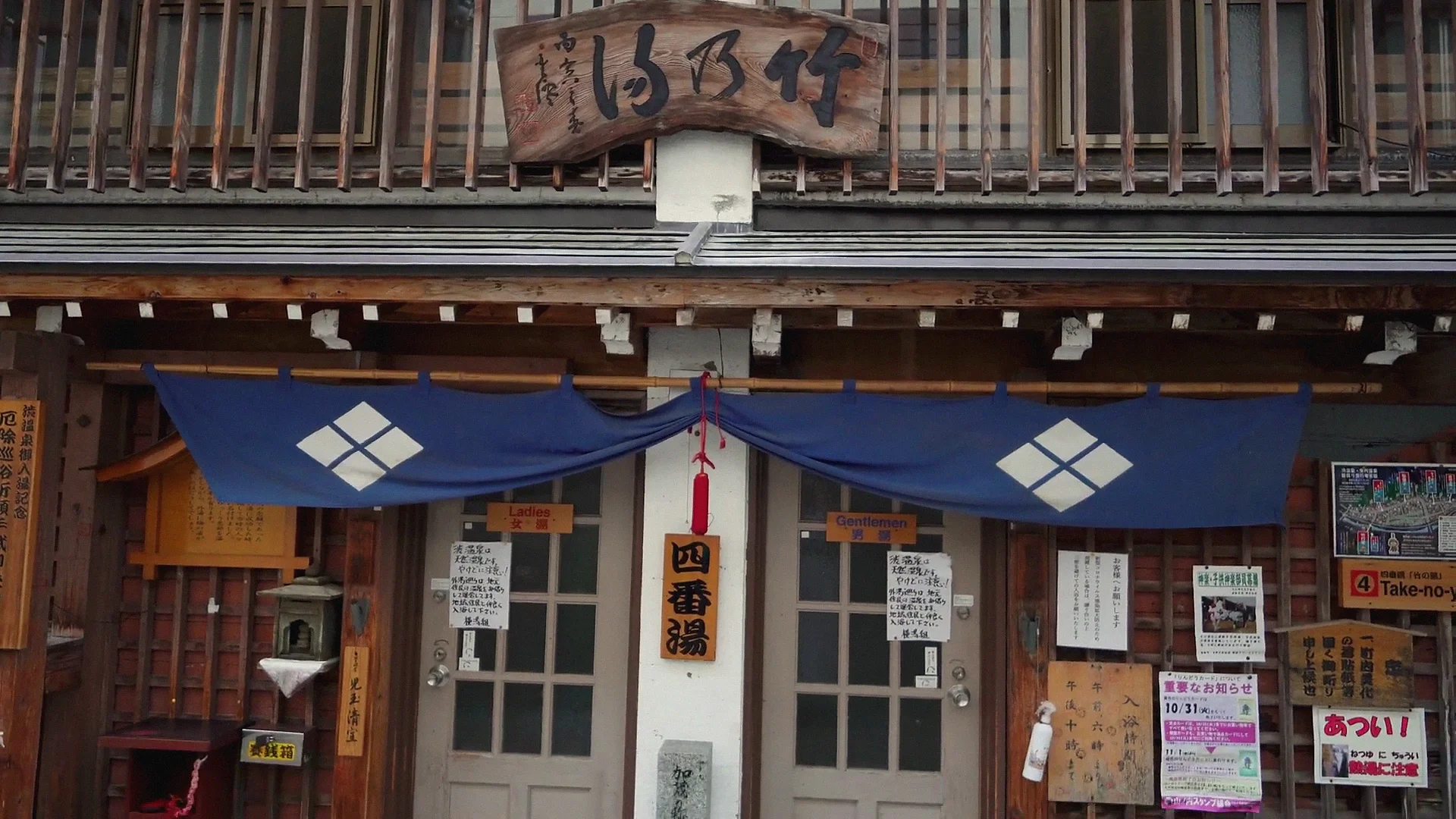
A noren at the door means the bath is open.
Modernized ryokan blend traditional hospitality with updated interiors: Western beds, renovated bathrooms, contemporary decor. The meal service and onsen bathing remain traditional, but the rooms are more familiar to international visitors. These occupy the middle ground between full traditional and hotel-style stays.
Hotels and guesthouses represent a small but growing segment, primarily in Yudanaka. A few properties operate with room-only or bed-and-breakfast rates, offering more flexibility and lower price points than the all-inclusive ryokan model. These suit travelers on a budget or those who prefer to eat independently.
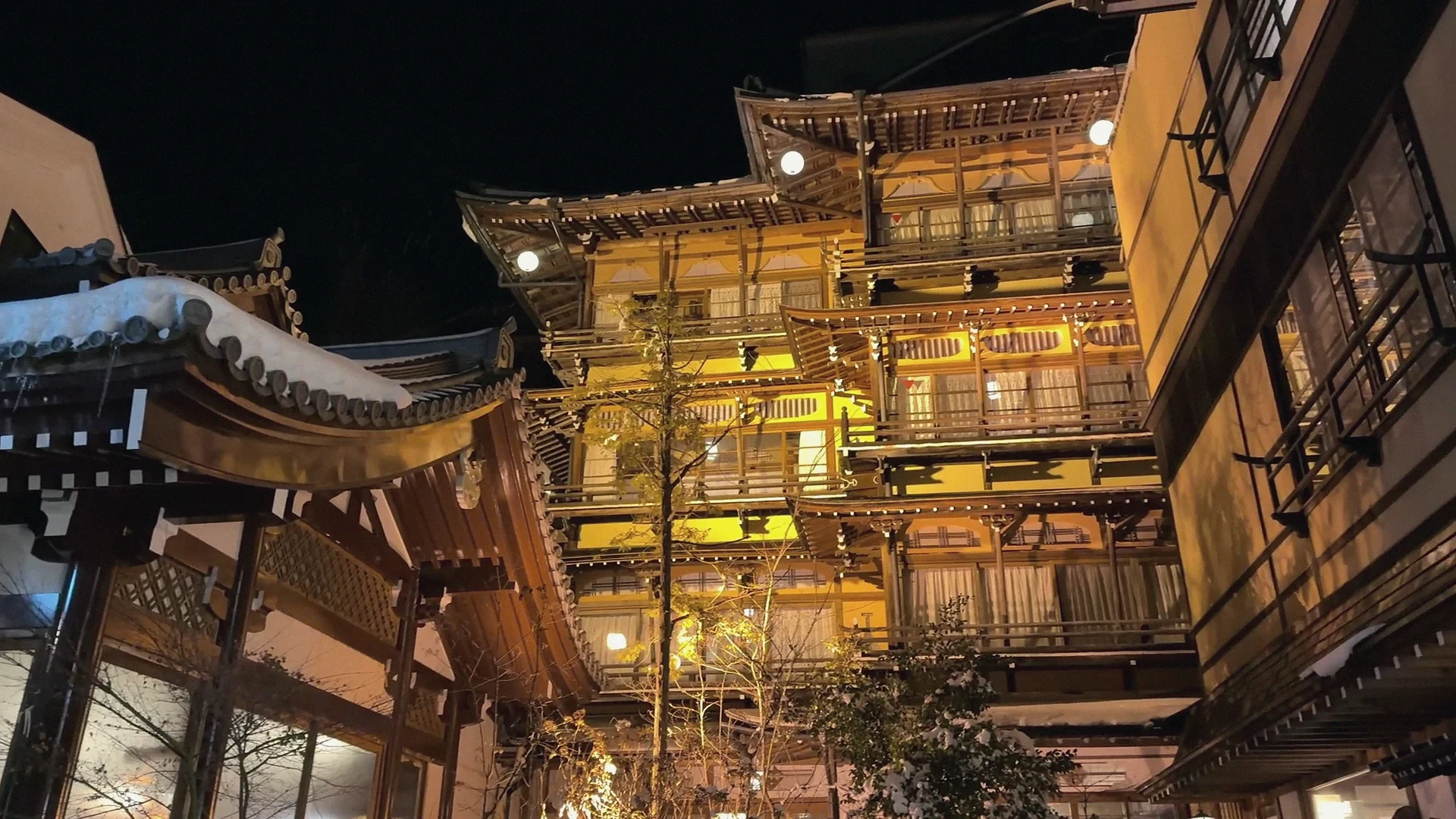
Luxury ryokan at the upper end offer refined kaiseki cuisine, premium private bath facilities, spacious rooms, and attentive personal service. Rates reflect the quality (expect ¥25,000 to ¥40,000 or more per person per night, roughly $170–$275 USD), but the experience can be exceptional.
Staying Overnight vs. Visiting as a Day Trip
The strongest argument for staying overnight is access to the park at opening time. The first hour after the park opens (9:00 AM in winter, 8:30 AM in warmer months) is consistently the best window for seeing the snow monkeys. Crowds are thin, the light is soft, and in cold weather the monkeys are most active in the hot spring. Day-trippers from Tokyo or Nagano simply cannot arrive early enough to catch this window.
The second argument is the experience itself. The ryokan stay, the kaiseki dinner, the onsen baths, the evening walk through a quiet onsen town: these are not incidental. For many visitors, they become the highlight of the trip, equal to or surpassing the monkey park itself. A day trip delivers the wildlife encounter but strips away the cultural context that makes the Yamanouchi area distinctive.
Day trips work when time or budget constraints make an overnight stay impractical. The monkey park is absolutely worth visiting even if you cannot stay the night. But if your itinerary has any flexibility at all, one night in Shibu Onsen or Yudanaka Onsen will repay the investment many times over.
How Far Each Area Is from the Monkey Park
Shibu Onsen to trailhead: Approximately 2 km / 1.2 miles (20–30 minutes on foot, 5 minutes by car or shuttle)
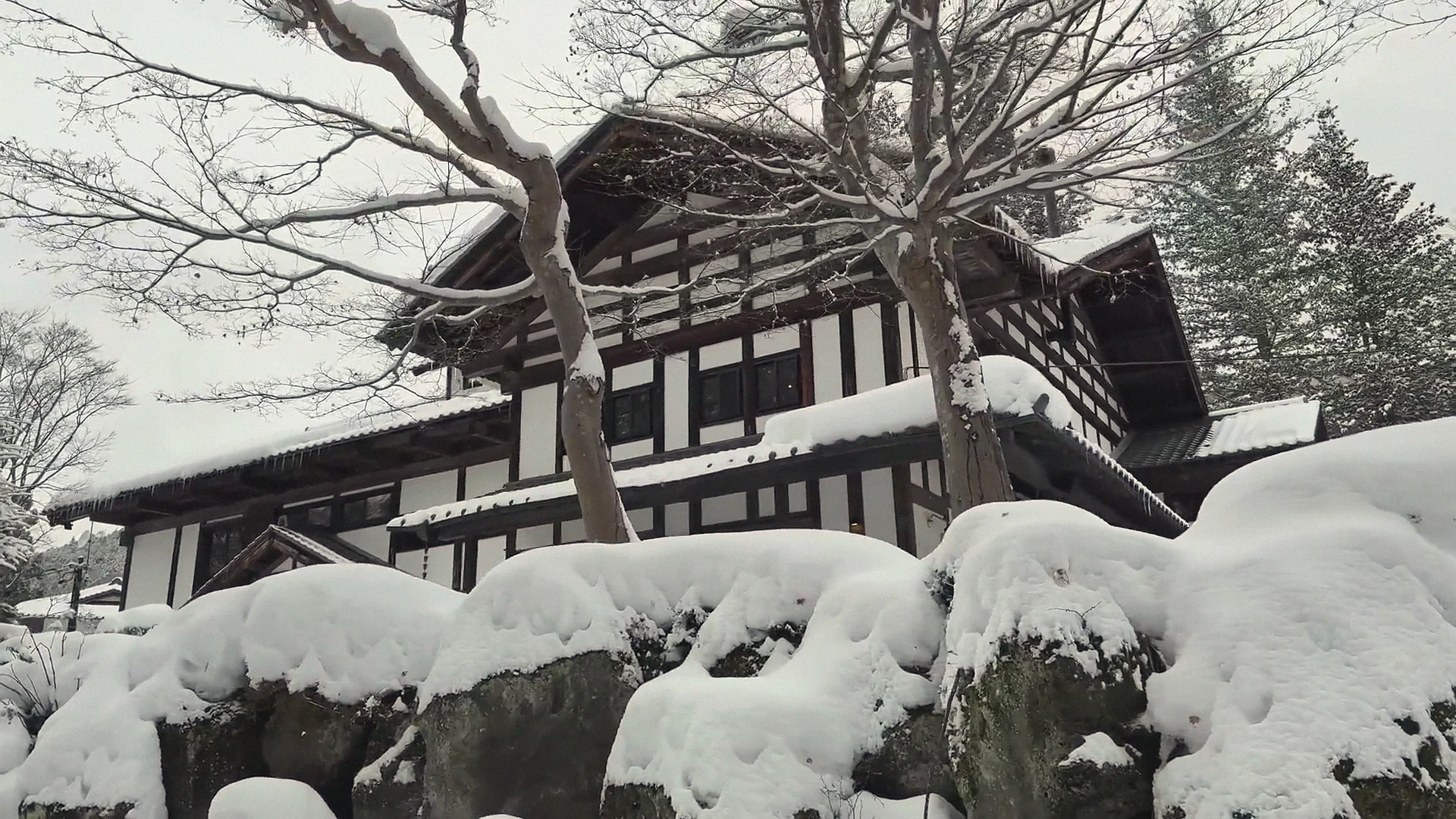
The last stretch is on foot, whichever base you pick.
Yudanaka Onsen to trailhead: Approximately 4 km / 2.5 miles (10–15 minutes by bus or taxi)
Nagano city to trailhead: Approximately 45 km / 28 miles (roughly 1.5 hours by train and bus)
Trailhead to the park viewing area: 1.6 km / 1 mile forest walk (25–35 minutes on foot, required for all visitors regardless of base)
Which Area Is Best for Different Types of Travelers
First-time visitors to Japan: Yudanaka Onsen. The direct rail access, broader accommodation range, and simpler logistics reduce friction for travelers navigating an unfamiliar country. The ryokan experience is still available and rewarding.
Photographers: Shibu Onsen. The closer proximity to the trailhead means you can reach the park earliest, and the atmospheric village provides additional subject matter in the evenings. Morning light and thin crowds at opening time are the most valuable assets for wildlife photography.
Families with children: Either onsen town works, depending on the children's ages and tolerance for traditional accommodation. Yudanaka's modern hotel options may be more comfortable for families with very young children. Ryokan with kashikiri (private) baths are particularly helpful for families unfamiliar with communal bathing.
Travelers without a car: Yudanaka Onsen has the edge. You step off the train and walk to your ryokan. Shibu Onsen requires a short bus ride, taxi, or ryokan shuttle from Yudanaka Station, easy to arrange but one extra step.
Couples and honeymooners: Shibu Onsen. The atmosphere, the evening bathhouse circuit, the intimacy of the village, and the quality of the traditional ryokan experience all favor travelers seeking something romantic and distinctive.
Budget travelers: Yudanaka Onsen or Nagano city. Yudanaka has a wider spread of prices, including some room-only guesthouses. Nagano city offers conventional business hotels at lower rates than any ryokan in the area.
Repeat visitors to Japan: Shibu Onsen. If you already know your way around Japanese trains and onsen etiquette, Shibu rewards that familiarity with a deeper, more atmospheric experience.
Best Time of Year to Book Accommodation
Winter (December–March) is peak season, and accommodation near the snow monkeys fills early. For stays during Japanese New Year (late December through early January) or February weekends, booking two to three months in advance is advisable. Popular ryokan in Shibu Onsen can sell out even further ahead. Weekday availability is somewhat better, but advance booking is still strongly recommended throughout winter.
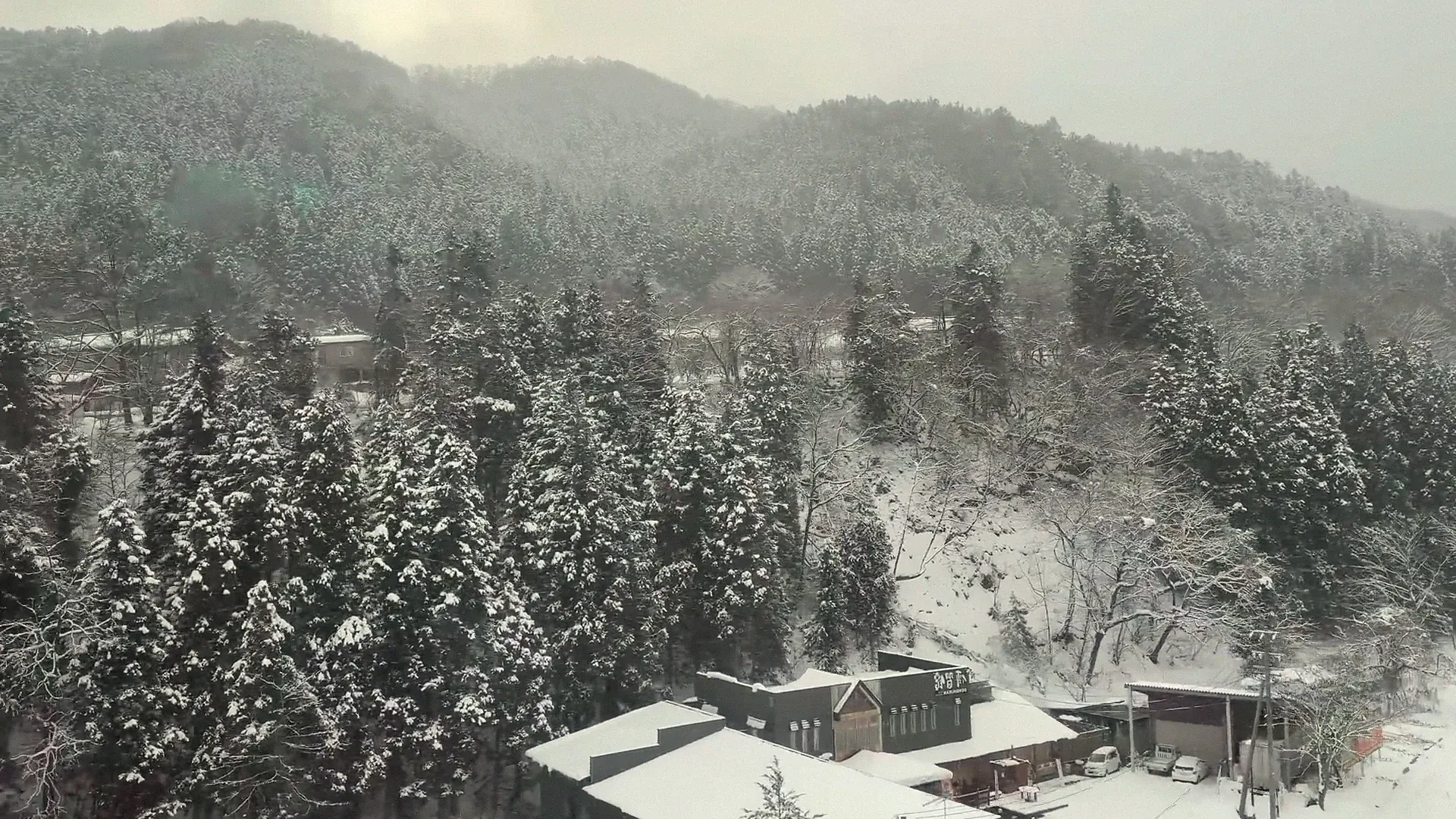
Winter books out first, and earliest.
Spring and autumn are less pressured. Booking two to four weeks ahead is generally sufficient, though popular properties may still fill on weekends. Flexibility on dates gives you more options.
Summer is the easiest season to book. Visitor numbers are low, availability is broad, and some ryokan offer reduced rates.
Cancellation policies vary by property. Many ryokan charge penalties for late cancellations, particularly during peak season. Read the terms carefully when booking.
Tips for Choosing the Right Place to Stay
Prioritize proximity if the park is your main goal. Staying in Shibu Onsen or Yudanaka Onsen gives you early access to the snow monkeys that a Nagano base cannot match. If the monkeys are the reason for your trip, stay close.
Check whether meals are included. Most traditional ryokan include dinner and breakfast. This is almost always worth it; the kaiseki dinner alone justifies the rate. If you prefer dining independently, look for room-only options in Yudanaka or Nagano.
Ask about shuttle service before booking. Transport to the trailhead and pickup from Yudanaka Station are common but not universal. Confirming these details in advance saves time and stress on arrival.
Read recent reviews. Ryokan range widely in upkeep and service quality. A beautiful building may have aging facilities or limited English-language support. Recent guest reviews are the most reliable guide to current conditions.
Consider two nights if your schedule allows. A single night works, but two nights gives you flexibility to visit the park twice (once in the afternoon, once the next morning) and time to enjoy the ryokan and the village at a relaxed pace.
Book early for winter weekends. This cannot be overstated. December through February weekends and holidays fill up, and the best ryokan go first.
Match the accommodation to your comfort level. If sleeping on a futon on a tatami floor sounds uncomfortable rather than adventurous, choose a ryokan or hotel with Western-style beds. There is no point in choosing an experience that leaves you unrested for the monkey park the next morning.
Summary
The best place to stay when visiting the snow monkeys at Jigokudani Monkey Park is in one of the two traditional onsen towns closest to the park: Shibu Onsen or Yudanaka Onsen. Both put you within easy reach of the trailhead, both offer traditional ryokan with hot spring bathing and multi-course meals, and both connect you to a side of rural Japan that most visitors never see. Shibu Onsen favors atmosphere and cultural depth. Yudanaka Onsen favors convenience and variety. Either one pairs beautifully with the monkey park.
Nagano city works as a day-trip base for travelers with limited time or a preference for urban accommodation, but it cannot replicate the early morning access or the evening onsen experience that make an overnight stay near the park so rewarding.
Whatever you choose, book early for winter, confirm your transport options, and give yourself at least one full evening to soak in the hot springs, eat a proper kaiseki dinner, and appreciate the quiet rhythm of a mountain onsen town. The snow monkeys are the reason you came. The place you stay is what you will remember longest.
Accommodation availability, prices, and services are subject to change. Confirm current details directly with your chosen property before booking. Information in this guide reflects conditions as of April 2026.

Verified by The Japan Onsen Society
1. 山ノ内町役場 (Yamanouchi Town official onsen list) — Municipal record: park access, walking times, climate and setting.
2. Go! NAGANO (Nagano Prefecture Tourism) — Prefectural official guide: access legs, hours, area detail.
3. 地獄谷野猿公苑【公式】 (Jigokudani Monkey Park, official) — The park's official account: opened 1964, elevation, bathing behavior, admission, conduct.
4. 長野電鉄 (Nagano Electric Railway) — Railway official: Snow Monkey Pass, fares, ticketing.
Verified July 7–16, 2026
Related guides
Where to Stay
Shibu Onsen Guide
Nine public baths, wooden inns, and a stone street you walk in a yukata.

Where to Stay
Yudanaka Onsen Guide
The station town, closer to the trains and easier on the budget.
Where to Stay
Luxury Ryokan Nagano
The luxury version of a snow monkey trip is a fine ryokan night: a room with a private open-air bath, a multi-course kaiseki dinner, and the park at opening the next morning — rural Japan at its most polished.