On this page
Quick answer
December is two different months: pleasantly busy near-peak conditions through about the 20th, then Japan's heaviest holiday crowds from December 29 through January 3. Come mid-month on a midweek cold snap and you get January's scenery with half the audience.
December is when Jigokudani begins turning into the place from the photographs. Cold arrives in the valley, the first lasting snows settle on the cedars, and the troop's visits to the hot spring shift from occasional to routine. It is not yet the deep-winter sure thing of January, but by the month's second half, the classic scene is reliably on display — along with the year's biggest holiday crowds in its final days.
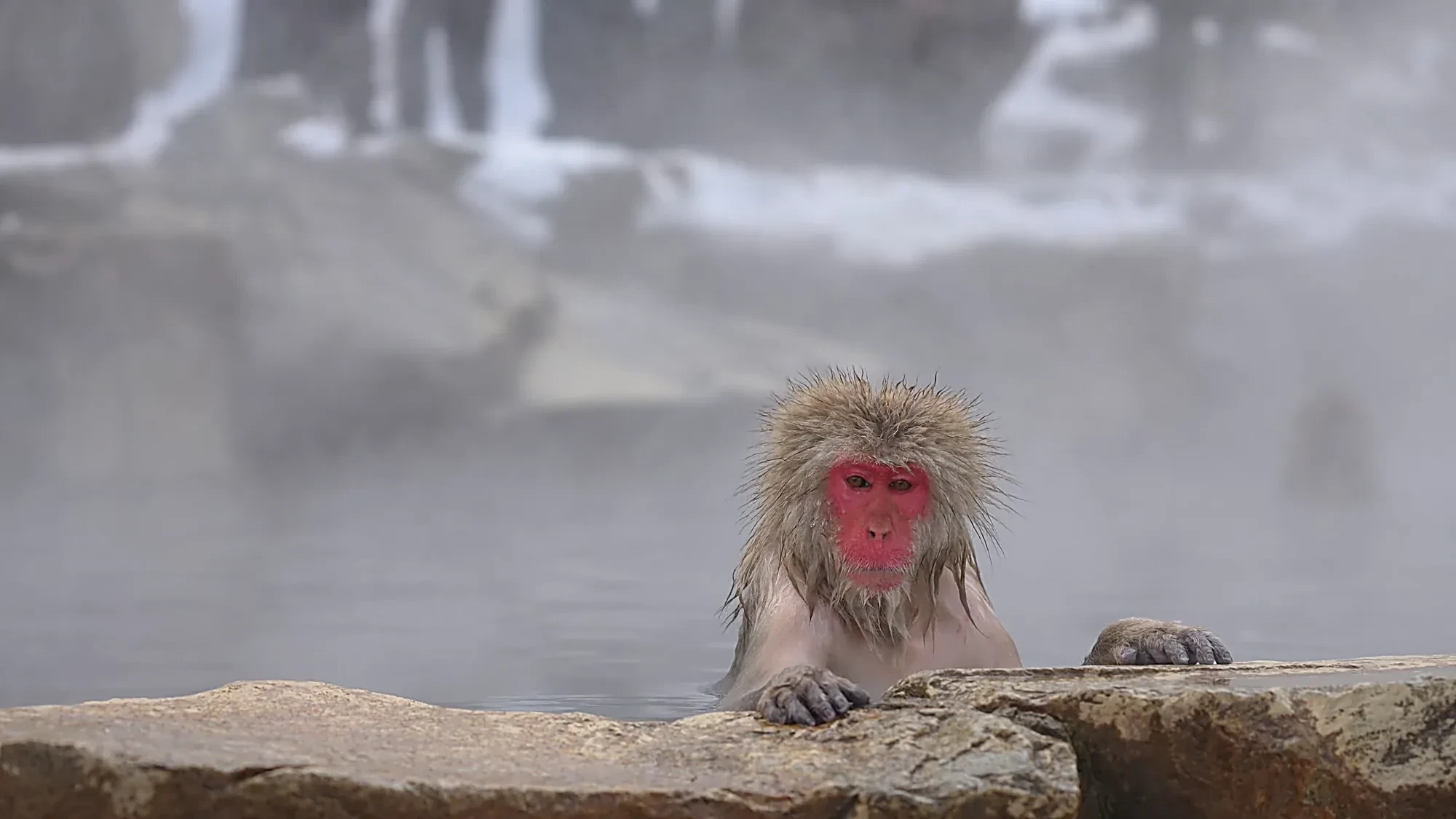
A pair soaks with eyes shut in the rising steam.
Conditions: Building Toward Winter
Early December is transitional. Snow may dust the valley and melt again, daytime temperatures swing around freezing, and the trail alternates between frozen and muddy. By mid-to-late December, winter usually commits: consistent sub-zero days, snow that stays, and the steam-and-snowfall atmosphere that defines the park. Temperatures typically run from around zero down to minus ten, colder at the month's end.
Park hours shift to the winter schedule — roughly 9:00 AM to 4:00 PM — and the 1.6 km (~1 mi) trail takes on its winter character of packed snow and ice. Waterproof boots and clip-on ice grips earn their keep from the first week; our winter clothing guide has the full checklist.
Monkey Activity: The Pool Comes Alive
Bathing behavior tracks the thermometer. Early in the month, expect monkeys in the water on cold mornings and sporadic activity on milder days. From late December onward, genuinely cold weather keeps a rotating cast of macaques in the pool through the day, with the biggest gatherings on the coldest, grayest days. Mornings are best: overnight cold leaves the troop eager for warm water soon after staff scatter the morning feed.
Crowds: Two Different Months
Through roughly December 20th, the park is pleasantly busy at most — one of winter's better-kept windows, with strong conditions and manageable numbers, especially midweek. Then the Japanese New Year period begins.
From around December 29th through January 3rd, the park sees its heaviest crowds of the entire year: full trains, queues at the entrance, and a packed viewing deck from mid-morning. If your dates land in that window, arrive at opening and consider a late-afternoon return visit; the hour before closing often thins out.
Why Choose December
Three reasons. First, mid-December offers near-peak conditions without peak-season crowd pressure. Second, the surrounding region is at its most atmospheric — Shibu Onsen's lantern-lit lanes under first snow are worth the trip alone. Third, pairing the park with the area's early ski season or an onsen stay makes a compact, varied winter itinerary; see our two-day Nagano itinerary.
Practical Notes
Book accommodation early if visiting after Christmas — the New Year window fills ryokan months ahead.
Daylight is short; the valley dims by late afternoon. Front-load your day.
Snowstorms occasionally delay buses or close the trail; build slack into day-trip schedules.
December rewards the slightly flexible traveler. Come mid-month on a midweek cold snap and you get January's scenery with half the audience. For the broader seasonal picture, see the full best time to visit guide.
Hours and conditions vary; confirm current details on the park's official website before your visit.
Frequently asked questions
Is there snow in early December?
Why choose December?

Show all sources
1. 地獄谷野猿公苑【公式】 (Jigokudani Monkey Park, official) — The park's official account: opened 1964, elevation, bathing behavior, admission, conduct.
2. 山ノ内町役場 (Yamanouchi Town official onsen list) — Municipal record: park access, walking times, climate and setting.
Verified July 7–16, 2026
Related guides

Plan Your Visit
Snow Monkeys in January
The coldest air, the deepest snow, the most reliable bathing. The famous photographs are made this month.
Plan Your Visit
What to Wear in Winter
The valley drops to −15 °C (5 °F) and the trail is packed ice for a mile. Boots matter more than your coat.
Plan Your Visit
Best Time to See Snow Monkeys
January and February for snow and steam. June for newborns. The monkeys are there every day of the year.