On this page
Quick answer
The New Year window (roughly Dec 29–Jan 3) combines Japan's biggest holiday with peak season — the heaviest crowds of the year. For conditions, unseasonably warm winter days and midsummer afternoons are when the famous bathing scene is least likely.
Most guides tell you when to visit the Snow Monkey Park. It is just as useful to know when not to — or more precisely, when the park will not match the picture in your head. The monkeys live in the valley year-round and the park rarely closes, so the worst time depends entirely on what you came for.

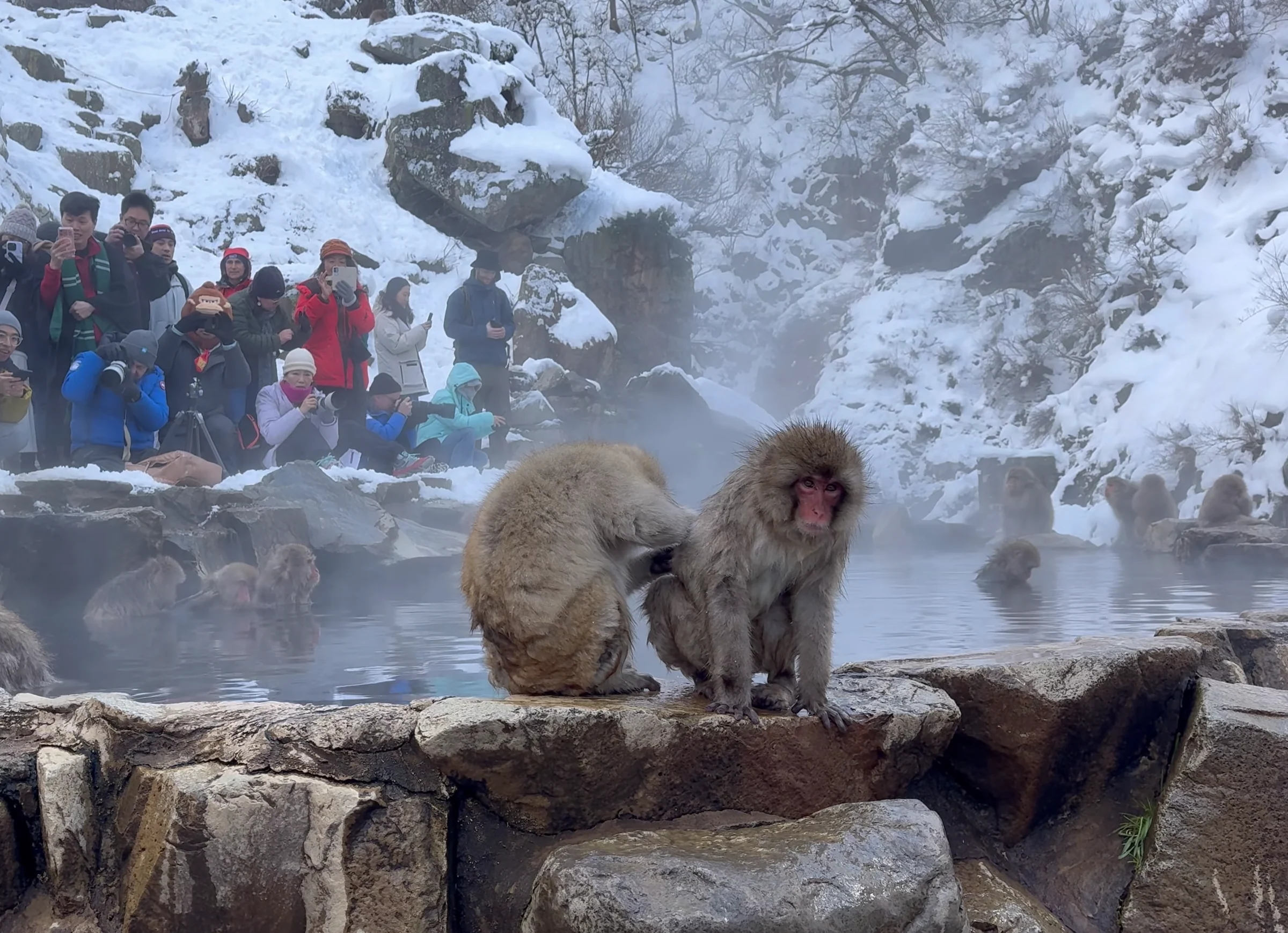
A macaque launches across the pool as the crowd captures it.
If You Came for the Iconic Bathing Scene: Avoid Summer
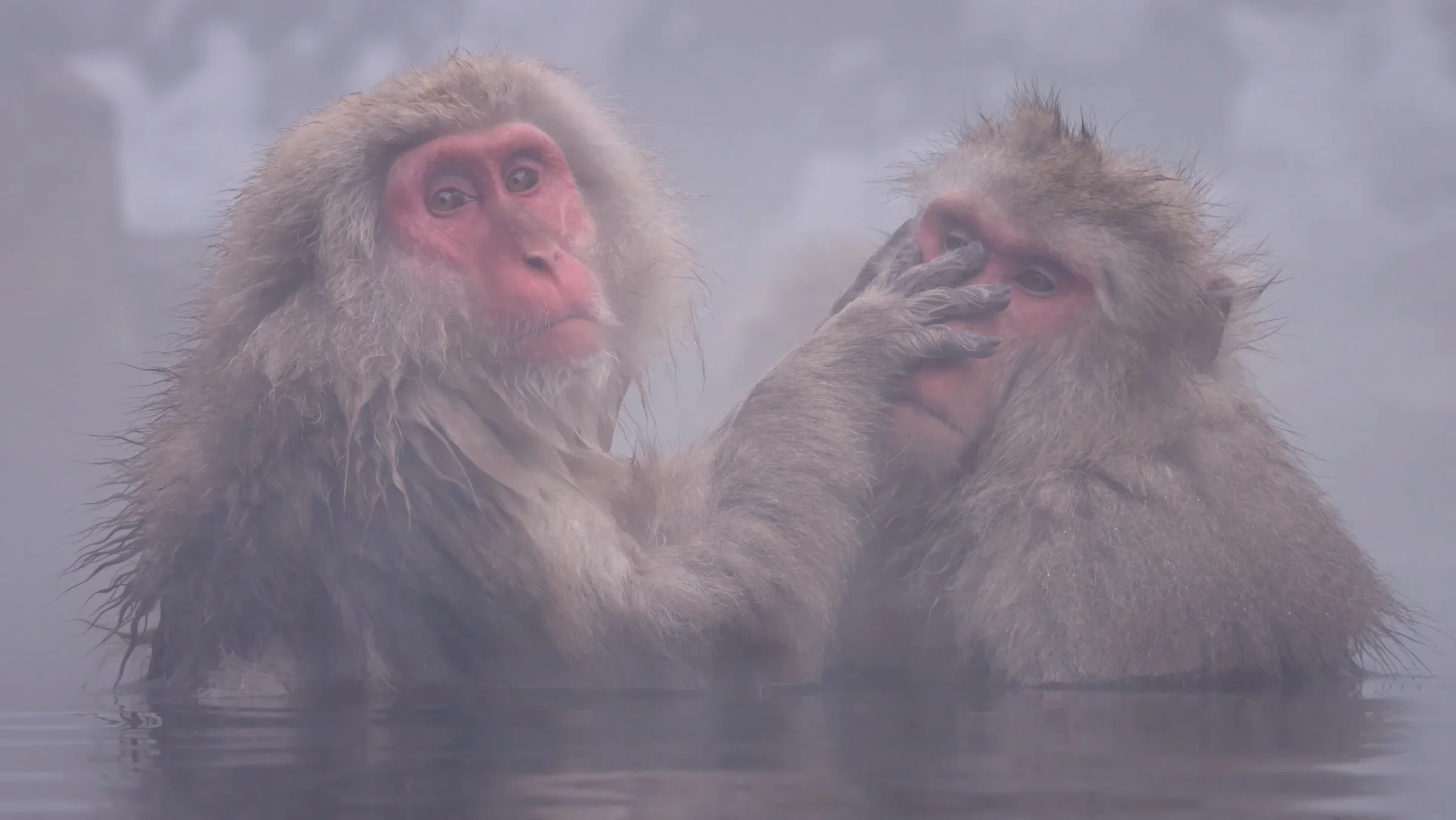
The famous image — macaques shoulder-deep in steaming water while snow falls — is a cold-weather behavior. The monkeys bathe because the warm water feels good when the air hurts; it is comfort, not ritual. From roughly June through September, air temperatures in the valley are pleasant, and the pool sits largely empty while the troop forages in the green forest.
A summer visit is not worthless — far from it. Birth season runs April to June, so summer offers infants clinging to mothers, juveniles wrestling, and lush scenery on an easy trail. But travelers who cross Japan in August specifically for the hot-spring photograph are setting themselves up for disappointment. Our summer guide covers what the warm months actually deliver.
If You Hate Crowds: Avoid the New Year Window
The stretch from late December through the first week of January combines Japan's biggest holiday period with the park's most photogenic season. The result is the heaviest crowding of the year: full trains on the Nagano Dentetsu line, queues at the ticket office, and a viewing area where clean photo angles require real patience. February weekends draw heavy traffic too, amplified by the area's ski season.
If winter is non-negotiable but crowds are intolerable, aim for midweek mornings in mid-January or late February, arrive at opening, and you will share the pool's first hour with a fraction of the mid-day numbers. See our best time of day guide for the hour-by-hour rhythm.
The Sneaky Disappointment: Mild Winter Days
Less obvious than season or crowds is weather within winter. On unseasonably warm winter days — when the valley hovers around zero instead of well below — fewer monkeys bother with the pool. They sit on the rocks, groom, and wait out the gray. The troop is still there and the visit is still good, but the postcard depends on genuine cold. If your dates are flexible by a day or two, pick the colder forecast, ideally with snowfall.
Shoulder Seasons: Manageable, Not Magical
Late March through April and November sit between identities. Snow is unreliable, bathing is sporadic, and the trail can be muddy with melt or early slush. These months are far from bad — crowds thin dramatically and the forest has its own quiet appeal — but they are compromise windows, best suited to travelers already in Nagano rather than those planning a dedicated trip.
The full seasonal breakdown is in our best time to visit guide.
The Honest Ranking
For the classic experience: January and February are peak, December and March close behind, autumn and spring acceptable, summer last. For solitude: reverse it almost exactly. There is no month where the park is a mistake — only months where it is a different park than the one in the photographs. Decide which version you want, and time the trip to match.
The park occasionally closes for severe weather; check official updates before traveling in any season.
Frequently asked questions
Should I skip it in summer?
How do I beat the crowds?

Show all sources
1. 地獄谷野猿公苑【公式】 (Jigokudani Monkey Park, official) — The park's official account: opened 1964, elevation, bathing behavior, admission, conduct.
Verified July 7–16, 2026
Related guides
Plan Your Visit
Best Time to See Snow Monkeys
January and February for snow and steam. June for newborns. The monkeys are there every day of the year.

Plan Your Visit
Snow Monkeys in Summer
No snow, no steam, no bathing. What you get instead: spring's infants, a green trail, and no crowd.

Plan Your Visit
Can You See Snow Monkeys Without Snow?
Yes. The troop lives here year round. But the bathing that makes the photographs is cold weather behaviour.