On this page
Quick answer
In winter, yes — Jigokudani is the only place on earth where wild monkeys bathe in a natural hot spring, and January–February delivers exactly what the photographs promise. Visit in summer expecting the postcard and it may not be.
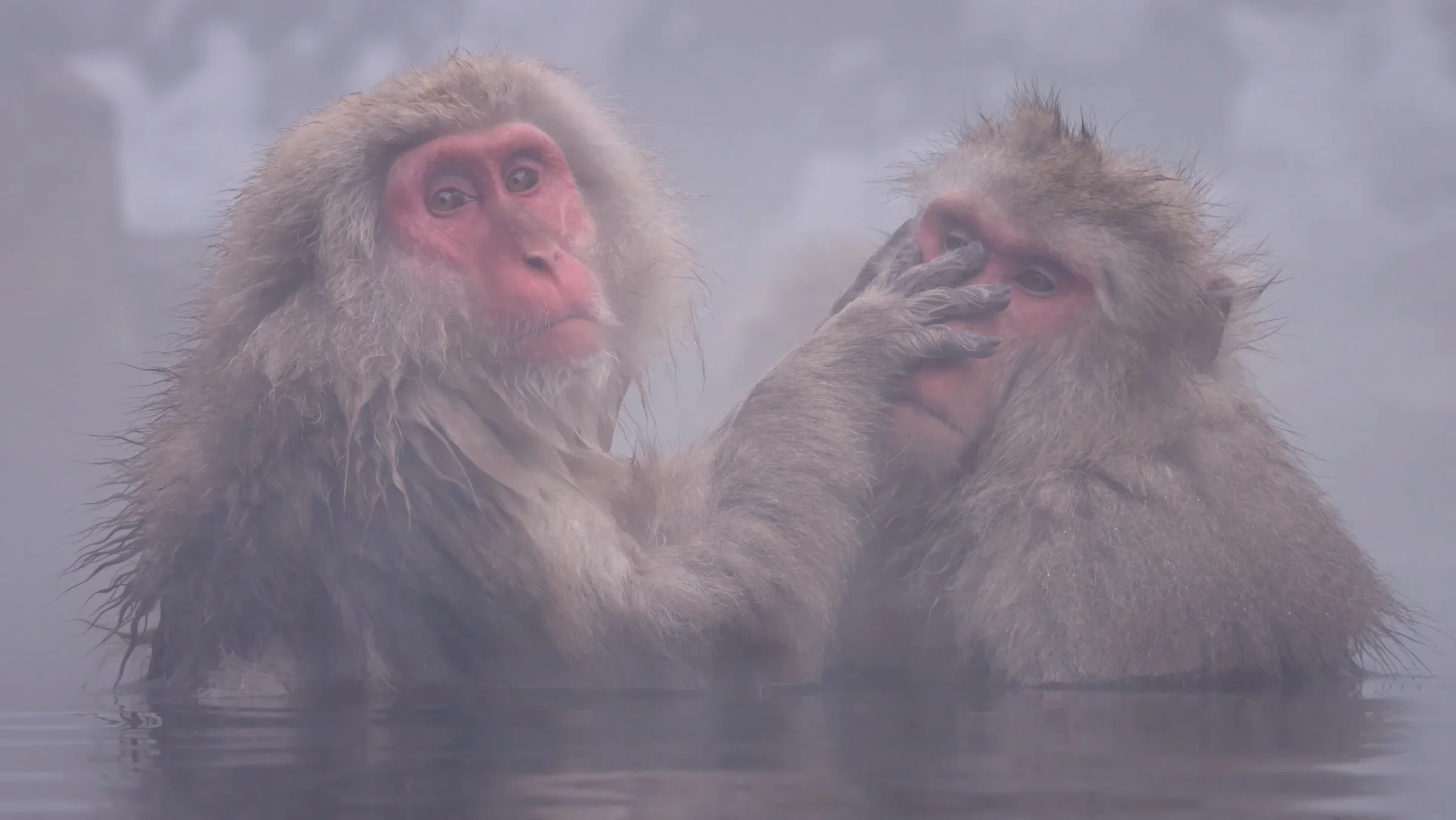
Few wildlife destinations carry expectations as specific as Jigokudani Monkey Park. Everyone arrives with the same image in mind: red-faced macaques soaking in a steaming pool while snow falls around them. The honest question is whether a half-day of travel, a forest walk, and a mountain winter are a fair price for that image. For most visitors, the answer is yes — with caveats worth knowing before you commit.

Visitors cross the little red bridge in the snowbound valley below the park.
What the Trip Actually Costs You
From Tokyo, plan on 2.5 to 3 hours each way: the Hokuriku Shinkansen to Nagano, the Nagano Dentetsu line to Yudanaka, a short bus or taxi ride to the trailhead, and finally a 1.6 km (~1 mi) walk through the forest. Park admission is 800 yen (~$5) for adults and 400 yen (~$3) for children ages 6–17. The shinkansen is the real expense — without a rail pass, the round trip from Tokyo runs roughly 16,000–18,000 yen (~$105–120).
The walk matters more than the money. There is no vehicle access to the park itself, and in winter the trail is packed snow and ice. It is not difficult with proper boots, but anyone expecting to step off a bus and onto the viewing deck should recalibrate.
What You Get in Return
Nowhere else in the world do wild monkeys bathe in hot springs. The troop at Jigokudani — roughly 160 Japanese macaques — developed the habit in the early 1960s and has passed it down through generations ever since. This is a culturally transmitted behavior in a wild animal, observed from a few meters away, in a volcanic valley that genuinely earns its name of Hell Valley.
The proximity is what surprises people. The macaques are wild and unhandled, but decades of careful management mean they largely ignore humans. You stand close enough to watch grooming chains, dominance squabbles, and mothers nursing infants without a fence in sight. In cold weather, the pool fills with bathers and the famous scene assembles itself in front of you.
When It Is Worth It — and When It Is Not
In January and February, the park delivers exactly what the photographs promise. Snow is reliable, temperatures sit well below freezing, and the monkeys use the hot spring throughout the day. December and March are nearly as good. If your trip falls in this window, the park belongs on your itinerary. See our guide to the best time to see the snow monkeys for the full seasonal picture.
Outside winter, the calculus changes. The monkeys remain in the area year-round and the forest setting is beautiful in every season, but hot-spring bathing is rare in warm weather. Summer visitors watch foraging and play rather than soaking. That is still a worthwhile wildlife encounter — especially during baby season from April to June — but it is not the iconic scene, and travelers crossing Japan specifically for the bathing image may leave disappointed.

The other extreme: in autumn the valley turns gold and green under blue sky — a different world from the winter scenes.
How to Maximize the Value
The single best upgrade is staying overnight in Shibu Onsen or Yudanaka Onsen. The villages are destinations in their own right — stone lanes, wooden ryokan, public bathhouses fed by mineral springs — and an overnight stay lets you reach the park at opening, when crowds are thin and cold mornings push the monkeys into the water. The combination of a ryokan bath for you and a hot spring for the macaques is the version of this trip people remember.
Day-trippers can make it work too. Leave Tokyo by 8:00 AM, and the schedule is tight but comfortable. Full route details are in our Tokyo to Snow Monkey Park guide.
The Verdict
Jigokudani is a conservation site, not a theme park, and that is precisely its appeal. The effort of reaching it — the trains, the cold, the walk along the Yokoyu River — filters the experience into something that feels earned. Visit in winter, stay a night in the onsen villages if you can, and the Snow Monkey Park is comfortably worth it. Visit in August expecting the postcard, and it may not be. Plan accordingly, and you will understand why this small valley in Nagano draws visitors from every corner of the world.
Practical information such as prices and schedules is subject to change. Confirm current details on the official Jigokudani Monkey Park website before your visit.
Frequently asked questions
Is the Snow Monkey Park a tourist trap?
How long should I spend there?
Is it worth it without snow?

Show all sources
1. 地獄谷野猿公苑【公式】 (Jigokudani Monkey Park, official) — The park's official account: opened 1964, elevation, bathing behavior, admission, conduct.
2. 山ノ内町役場 (Yamanouchi Town official onsen list) — Municipal record: park access, walking times, climate and setting.
3. 長野電鉄 (Nagano Electric Railway) — Railway official: Snow Monkey Pass, fares, ticketing.
Verified July 7–16, 2026
Related guides

Plan Your Visit
Snow Monkey Park
Wild macaques bathe in a hot spring in the Nagano mountains. Nowhere else on earth do monkeys do this.

Plan Your Visit
How Long Do You Need at Snow Monkey Park
Most visitors spend 30 to 60 minutes at the viewing area. The full trip from Nagano runs three to four hours.
Plan Your Visit
Best Time to See Snow Monkeys
January and February for snow and steam. June for newborns. The monkeys are there every day of the year.