On this page
Quick answer
The only way in is on foot: a 1.6 km (~1 mi) forest path from the Kanbayashi trailhead, 25–35 minutes at a steady pace, clearly marked with no junctions. It is icy in winter — boots and ice grips are mandatory, strollers are not practical.
Part of what keeps Jigokudani feeling wild is that you cannot drive to it. The park sits up the Yokoyu River valley beyond the reach of any road, and every visitor — photographer, tour group, family — covers the same 1.6 kilometers of forest trail on foot. The walk is half the experience, and knowing what it involves makes the whole visit smoother.
The Basics
The trail begins near the Kanbayashi Onsen bus stop and parking area, where a wooden gate marks the entrance to the forest path. From there it runs roughly 1.6 km — about a mile — to the park's ticket office, following the river upstream beneath tall cedars. At a moderate pace the walk takes 25 to 35 minutes each way. The gradient is gentle: mostly flat, with a steady rise near the end and a final set of steps up to the entrance.
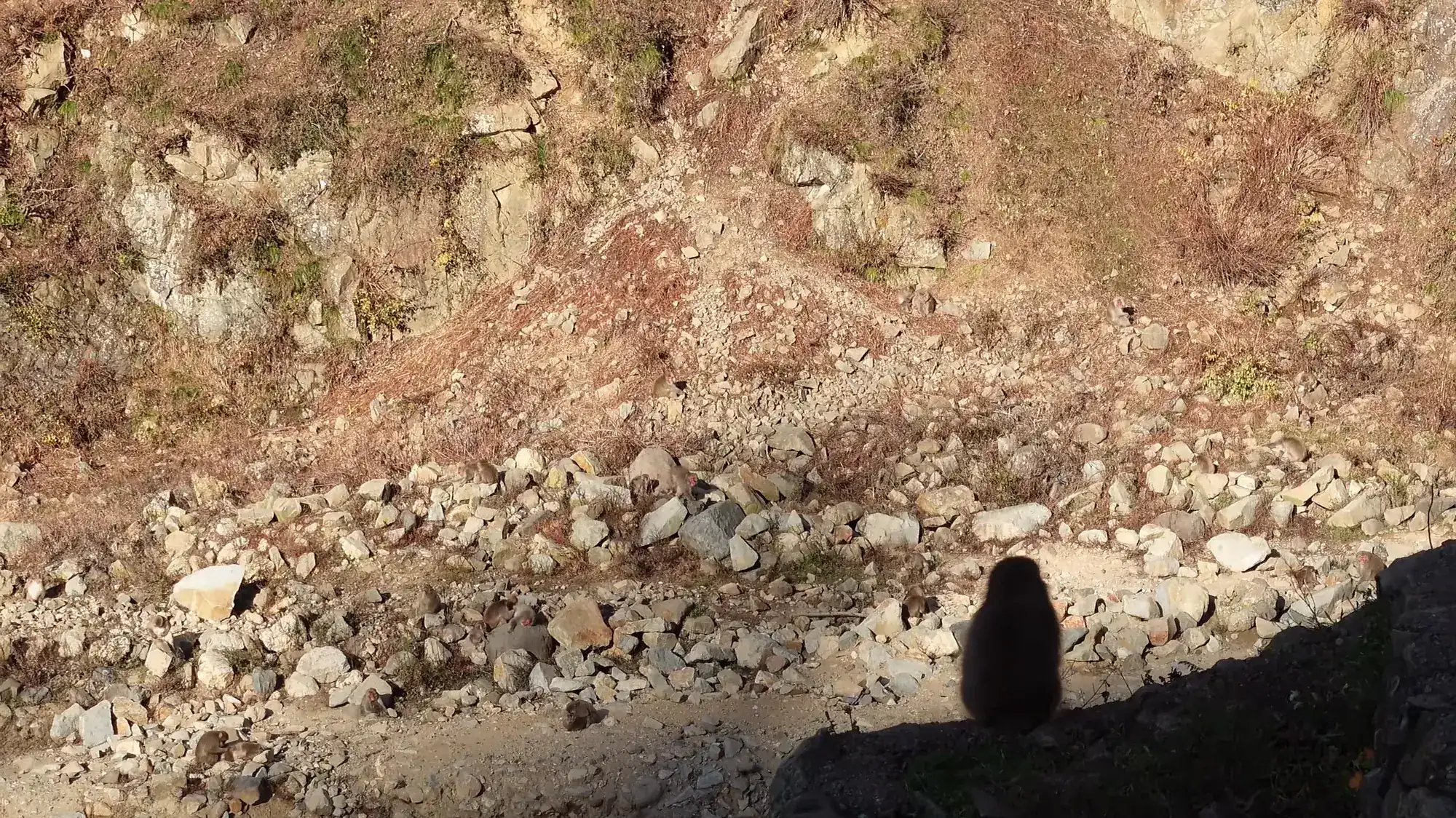
A monkey's shadow on the route in to the park.
There are no junctions to worry about. One trail in, the same trail out. You cannot get lost, but you should budget time for the return leg, especially if your bus or train connection is tight.
Facilities — Use Them Before You Walk
Restrooms are available at the trailhead and again at the park entrance, but nowhere in between. The small cluster of shops near the trailhead is your last chance for snacks, drinks, and inexpensive ice grips before the forest. At the viewing area itself there are no food vendors or vending machines, so carry water — concealed in your bag, away from curious monkeys.
The Trail in Winter
From December through March, the path lives under packed snow and ice. Park staff maintain and clear it, but the surface stays slick, and the season's few injuries happen here rather than at the park. Two things keep the walk safe and pleasant: waterproof boots with deep tread, and clip-on ice grips, which are sold cheaply at shops in Nagano and near the trailhead. Our winter clothing guide covers the full checklist.
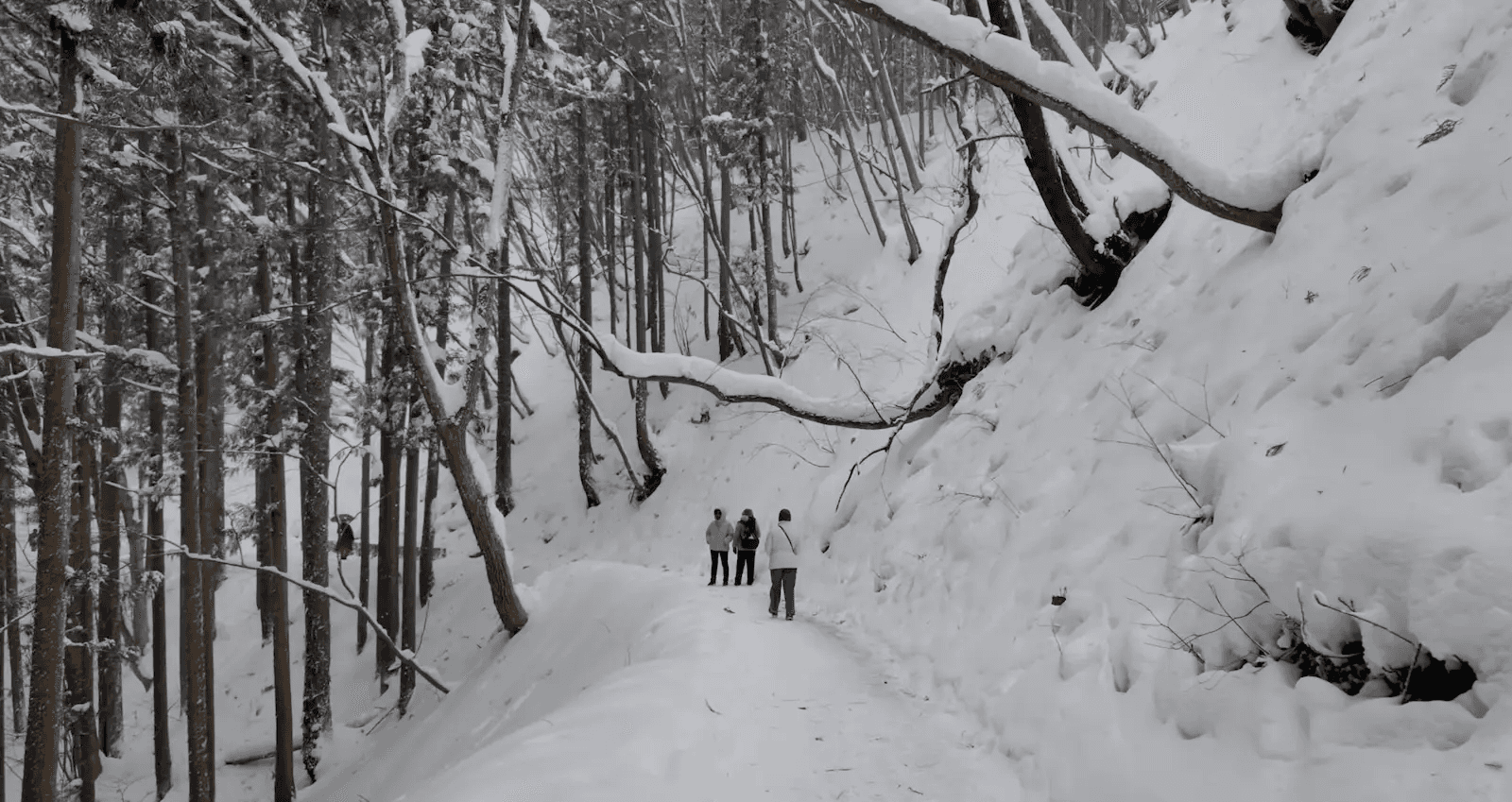
The 1.6 km (~1 mi) forest path in midwinter — packed snow, no junctions, 25–35 minutes at a steady pace
Walked properly equipped, the winter trail is one of the most beautiful parts of the trip — silent forest, snow-loaded branches, the river running dark between white banks. Many visitors rank the walk alongside the monkeys themselves.
The Trail in Other Seasons
Outside winter, conditions are straightforward. The surface is packed dirt with occasional roots and stones, comfortable in ordinary walking shoes. Spring brings patches of meltwater and mud, summer is green and shaded — noticeably cooler than the valley floor — and autumn edges the cedars with color. Whatever the month, the gradient stays gentle.
Accessibility and Families
Children who can manage a mile each way handle the trail well, and it makes a genuinely good family walk. Wheeled access is another matter: the distance, the surface, and the final steps up to the entrance make strollers and wheelchairs impractical, particularly in snow. A baby carrier works far better than wheels here.
Timing Your Walk
Allow 25–35 minutes each way at a steady pace, and more in icy conditions. Walking in for the park's opening is the quiet hour — steam hanging over the river, the forest still, the viewing area ahead nearly empty. The return leg always takes longer than you expect; budget for it if a bus or train connection is waiting at the other end..
Frequently asked questions
Is the trail hard?
Is there wheelchair access?

Show all sources
1. 山ノ内町役場 (Yamanouchi Town official onsen list) — Municipal record: park access, walking times, climate and setting.
2. 地獄谷野猿公苑【公式】 (Jigokudani Monkey Park, official) — The park's official account: opened 1964, elevation, bathing behavior, admission, conduct.
Verified July 7–16, 2026
Related guides
Plan Your Visit
What to Wear in Winter
The valley drops to −15 °C (5 °F) and the trail is packed ice for a mile. Boots matter more than your coat.

Plan Your Visit
Snow Monkey Park
Wild macaques bathe in a hot spring in the Nagano mountains. Nowhere else on earth do monkeys do this.

Plan Your Visit
How Long Do You Need at Snow Monkey Park
Most visitors spend 30 to 60 minutes at the viewing area. The full trip from Nagano runs three to four hours.