On this page
Quick answer
Almost — the troop of roughly 160 descends to the park area nearly every day, drawn by morning feed scattered by staff. No wild-animal sighting is guaranteed, but January at Jigokudani is about as close as wildlife viewing comes.
It is the quiet worry behind every visit: the monkeys are wild, nobody fences them in, and you are traveling three hours from Tokyo on the assumption they will be there. So — do they actually show up every day? Almost. And the reasons why are part of what makes Jigokudani interesting.
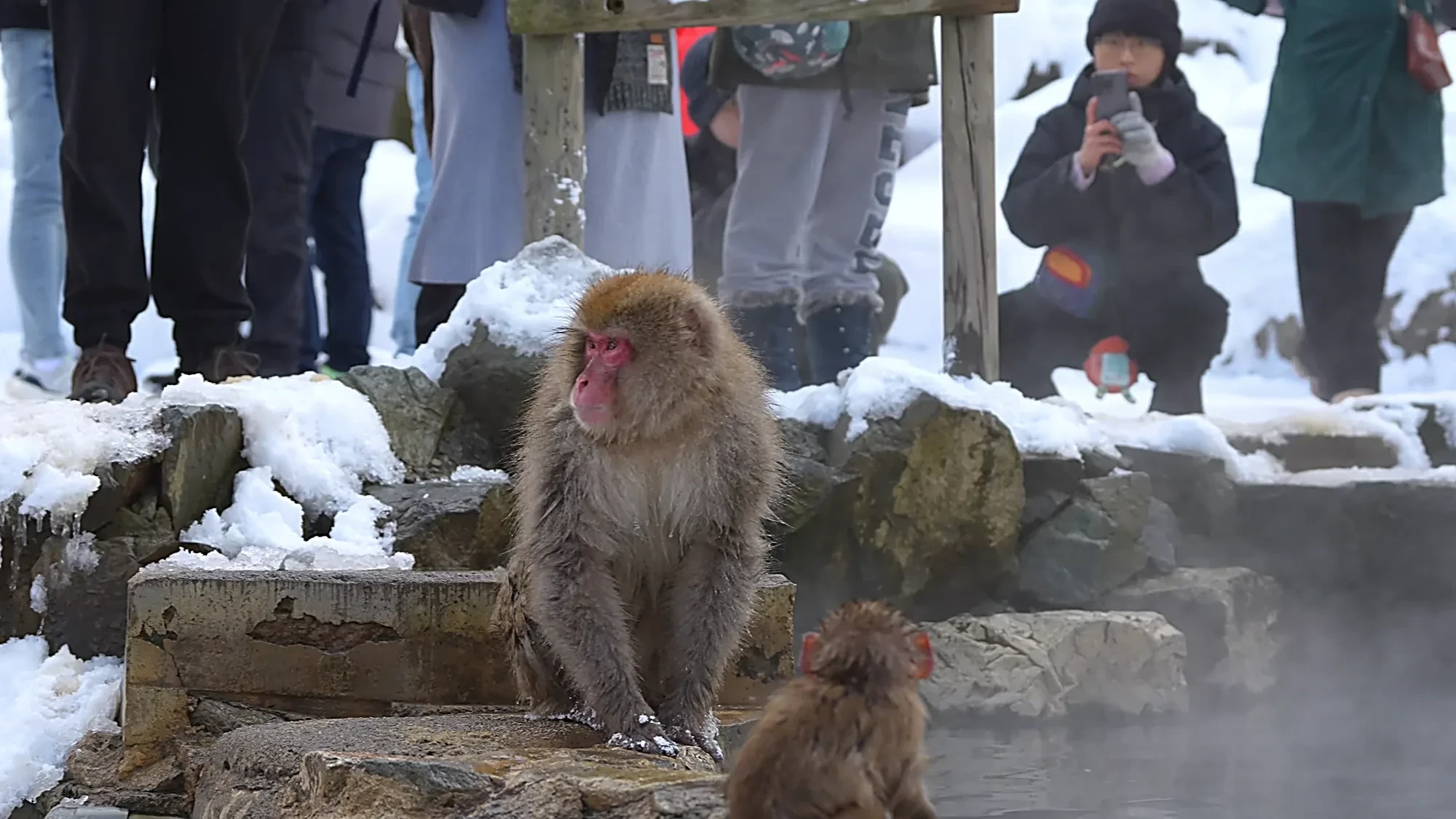
Not always a soak — monkeys also wade the shallows, picking up food the keepers scatter at the pool's edge.
Why the Troop Keeps Coming Back
The roughly 160 macaques of the Jigokudani troop sleep in the surrounding forest and range freely through the valley. Two things anchor them to the park's viewing area. The first is supplemental feeding: park staff scatter raw barley and soybeans several times a day, enough to make the area worth visiting but deliberately not enough to support the troop outright. The second, in cold months, is the hot spring itself — a source of genuine thermal comfort that the troop has used for over sixty years.
The result is a wild population with a strong daily habit. The monkeys are not captive and not dependent, but the park is the best deal in their valley, and they know it.
How Reliable Is Almost Every Day?
In winter, extremely. Cold weather concentrates the troop at the pool with remarkable consistency. From December through March, days without monkeys at the viewing area are genuinely rare, and the main variable is not whether they appear but how many soak and for how long — a function of temperature. Colder days mean more bathing; see our seasonal guide for the pattern.
In warmer months, very good but not absolute. When the forest fills with natural food in summer and autumn, the troop sometimes ranges farther and arrives late, leaves early, or — on rare days — skips the area entirely. The park is candid about this and posts daily monkey activity updates on its website and at the entrance. A quick check before you start the 1.6 km (~1 mi) walk is the single best insurance you have.

A family group grooms in the shade of an old log on a summer afternoon.
The Rhythm of a Typical Day
Mornings are the dependable window. The troop tends to descend from its sleeping sites soon after the park opens, with activity peaking around staff feedings. In winter, cold-stiffened monkeys head for the warm water early; in summer, they drift through to forage and socialize before the day warms. Afternoons are more variable, and toward closing the troop gradually retreats upslope. Arriving in the first two hours of opening puts the odds firmly in your favor — the same window our time-of-day guide recommends for light and crowds.
What If You Hit the Unlucky Day?
It happens rarely, and the park makes no secret when it does — staff at the entrance will tell you what the troop has been doing, and the activity updates online are current. If the monkeys are absent at midday, they often return later; visitors with flexible schedules can wait or come back, since tickets are inexpensive (800 yen (~$5) for adults). Overnight guests in Shibu Onsen or Yudanaka hold the real advantage: a second morning attempt costs nothing but an early alarm.
The Bottom Line
No honest wildlife site offers a guarantee, and Jigokudani's managers never claim one. What they offer instead is a six-decade track record of a wild troop that, nearly every day of the year, decides the hot spring and the barley are worth the trip down the mountain. Visit in winter, arrive in the morning, check the day's update before walking in — and the monkeys will almost certainly be there before you are.
Daily activity reports are posted by the park; check them on the morning of your visit.
Frequently asked questions
What if they don't show?
Do they bathe every day?

Show all sources
1. 地獄谷野猿公苑【公式】 (Jigokudani Monkey Park, official) — The park's official account: opened 1964, elevation, bathing behavior, admission, conduct.
2. 山ノ内町役場 (Yamanouchi Town official onsen list) — Municipal record: park access, walking times, climate and setting.
Verified July 7–16, 2026
Related guides
The Park and Monkeys
Best Time of Day to See Snow Monkeys
The first two hours after opening. Peak bathing, the best light, and the platform before the tour buses.

The Park and Monkeys
Snow Monkey Park
Wild macaques bathe in a hot spring in the Nagano mountains. Nowhere else on earth do monkeys do this.
The Park and Monkeys
Are Snow Monkeys Dangerous?
These are wild macaques, not a petting zoo. Serious incidents are rare, and the rules are the reason why.