On this page
Quick answer
February is January's quieter twin — the deepest snowpack of the season, the same near-daily bathing, and midweek mornings that can feel almost private once the New Year rush is a memory. If January is the famous month, February is the informed choice.
February is January's quieter twin. The snowpack reaches its deepest, the cold holds steady, and the monkeys remain devoted to their hot spring — but the New Year holiday rush is a memory, and midweek mornings can feel almost private. If January is the famous month, February is the informed choice.
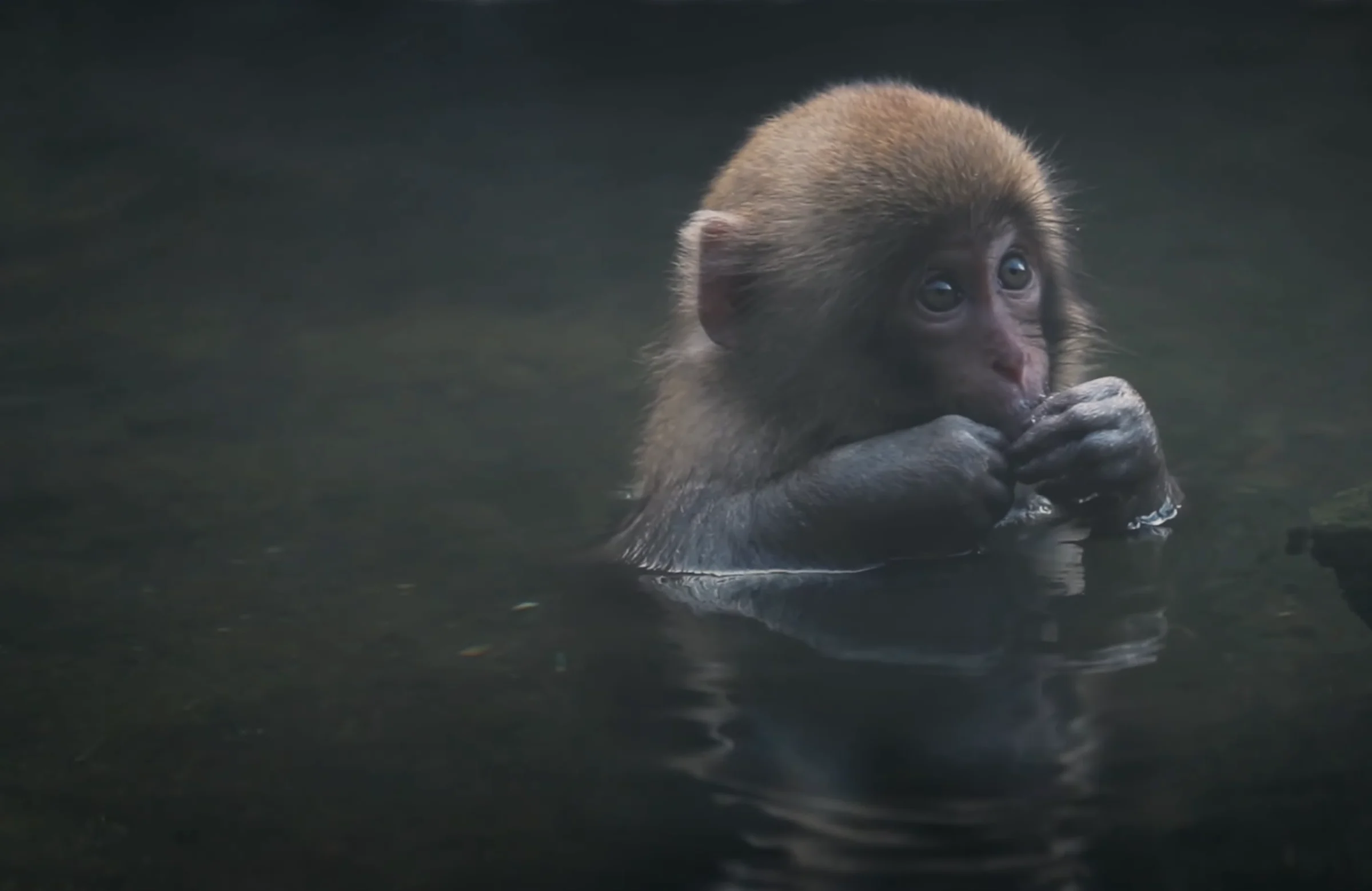
Young macaques huddle for warmth at the pool's edge while the troop soaks behind them — Jigokudani in deep winter.
Conditions: The Deepest Winter
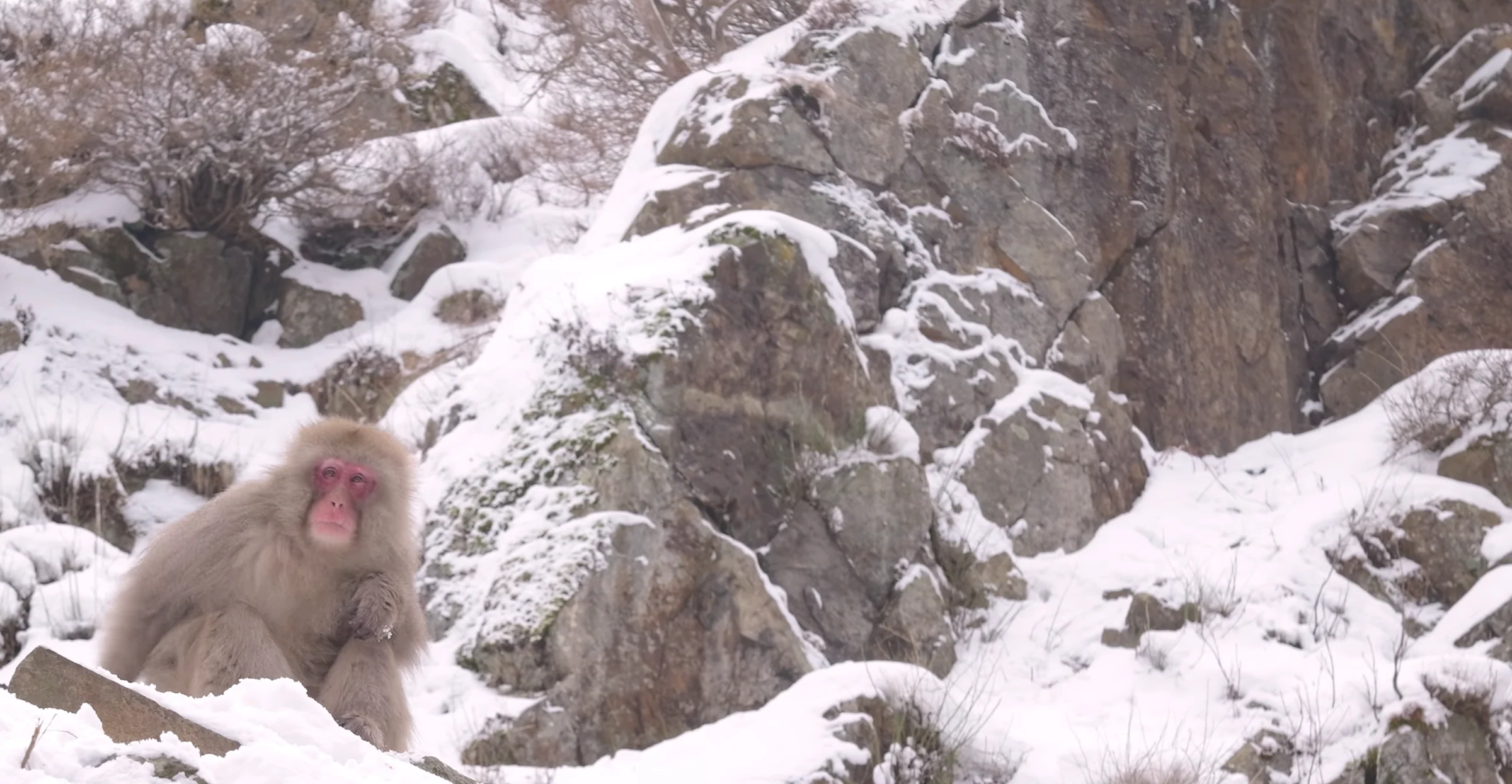
February typically brings the heaviest cumulative snow of the season to the Yokoyu valley. Temperatures hold between minus 5 and minus 15 degrees Celsius, with wind chill pushing lower, and the landscape around the pool stays reliably white through the month. The approach trail remains a corridor of packed snow — manageable and beautiful with proper boots and ice grips, treacherous in sneakers. Our winter clothing guide covers the kit.
Heavy snowfall is more frequent than in any other month. For photographers this is a gift; for schedules it is a variable. Buses from Yudanaka occasionally run late, and severe storms can briefly close the trail, so build slack into tight itineraries and check the park's updates each morning.
Monkey Activity: Peak Bathing Continues
Everything that makes January reliable applies in February. Cold nights send the troop to the water soon after opening; cold days keep a rotating cast soaking into the afternoon. Steam, snow on fur, infants huddled against mothers in the pool — the full repertoire is on display daily. As always, mornings outperform afternoons, and the coldest days outperform mild ones.
Crowds: Winter's Best Ratio
February weekends are busy — the park shares the region with the Shiga Kogen and Nozawa Onsen ski crowds, and Lunar New Year travel adds international visitors in some years. But weekdays settle into winter's most comfortable rhythm: full bathing activity with room to work at the railing.

A mother and her young press together against the snow to keep warm.
A midweek February morning, arriving at opening, is arguably the single best slot of the entire snow monkey calendar. The time-of-day guide breaks down the daily pattern.
Pairing February with the Region
February is the easiest month to build a genuinely great two-day trip around. Ski or snowboard Shiga Kogen one day, visit the monkeys at opening the next, and spend the night between them in Shibu Onsen, bathhouse-hopping through the snow in a yukata and borrowed boots. The two-day Nagano itinerary maps it out.
Practical Notes
Winter hours: roughly 9:00 AM to 4:00 PM. Aim for the first two hours.
Carry cash — park entrance (800 yen (~$5) adults, 400 yen (~$3) children 6–17), buses, and many village shops remain cash-first.
Daylight grows noticeably by late February, easing day-trip timing from Tokyo.
If your dates are flexible within winter, February midweek is the quiet path to the loud photograph. For the year-round picture, see the full best time to visit guide.
Conditions and hours vary; confirm current details on the park's official website before traveling.
Frequently asked questions
January or February?
Does heavy snow close the park?

Show all sources
1. 地獄谷野猿公苑【公式】 (Jigokudani Monkey Park, official) — The park's official account: opened 1964, elevation, bathing behavior, admission, conduct.
2. 山ノ内町役場 (Yamanouchi Town official onsen list) — Municipal record: park access, walking times, climate and setting.
Verified July 7–16, 2026
Related guides

Plan Your Visit
Snow Monkeys in January
The coldest air, the deepest snow, the most reliable bathing. The famous photographs are made this month.
Plan Your Visit
Snow Monkeys in December
Cold settles in and bathing picks up week by week. Early December is quiet. The last week is not.
Plan Your Visit
Best Time to See Snow Monkeys
January and February for snow and steam. June for newborns. The monkeys are there every day of the year.