On this page
Quick answer
Arrive at opening for the best light, thickest steam, and fewest people; overcast January skies act as a giant softbox. The monkeys ignore humans, so a 70–200 mm covers portraits and a wide lens covers the valley scene.
The snow monkeys may be the most photographed wild animals in Japan, and for good reason: nowhere else can you work this close to expressive primates in a setting this dramatic. But Jigokudani punishes unprepared photographers in its own specific ways. The light is flat, the air is full of steam, the temperature is brutal on batteries and fingers, and the viewing area is small and shared. Here is how to come home with the shots.

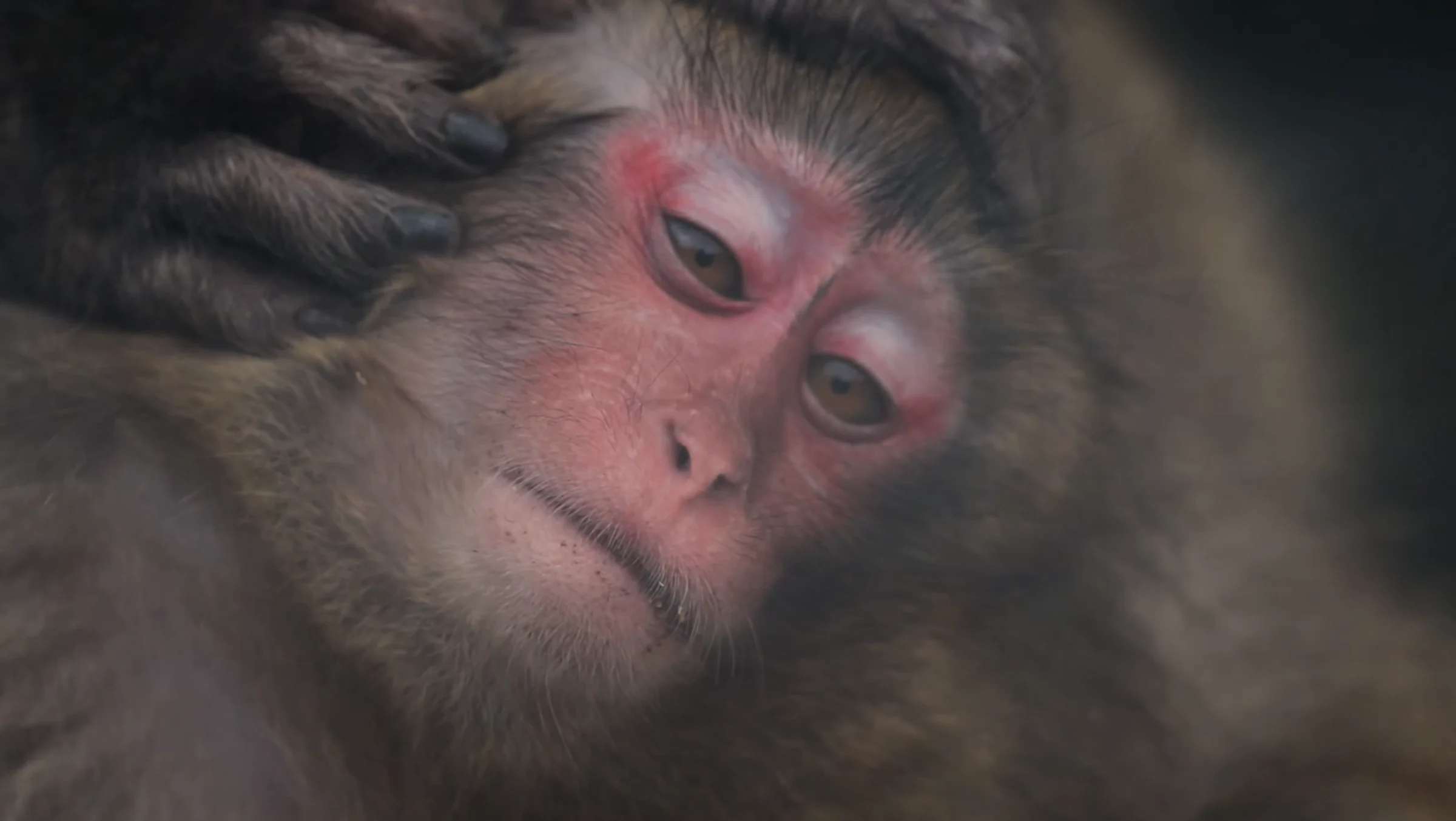
A macaque freezes mid-leap above the steaming pool.
Gear That Earns Its Place
A medium telephoto in the 70–200mm range (full-frame equivalent) is the workhorse here. It fills the frame with a single bathing monkey from a respectful distance and compresses the steam into atmosphere. A wide-angle lens earns its weight for the establishing scene — the whole pool, the snowy rocks, the valley walls. Between those two, you have the location covered; there is little need for exotic glass.
Tripods are permitted but awkward in the often-crowded viewing area, and you will move frequently. A monopod or good image stabilization is more practical. In midwinter, bring two or three spare batteries and keep them in an inside pocket — cold cuts battery life dramatically.
The Condensation Problem
The defining technical challenge at Jigokudani is the temperature gap between freezing air and warm steam. Walk your lens close to the pool and it fogs instantly; bring a cold camera into a warm bus afterward and it fogs again.
Keep the camera tucked inside your jacket between shots, let it adjust gradually to temperature changes, and carry a lens cloth you can reach with gloves on. Some photographers tape a hand warmer loosely near the lens barrel on the coldest days.
Light and Weather
Counterintuitively, the classic blue-sky day is not the best forecast. Overcast skies act as a giant softbox, eliminating harsh shadows on deep-set primate faces and letting the red skin and frosted fur render cleanly. Falling snow adds depth and motion. The best combination is genuinely cold weather — which fills the pool with monkeys — under bright cloud.
Light in the valley is best in the first hours after opening, which also coincides with the thinnest crowds and the most bathing activity. Cold nights leave the troop eager for the warm water in the morning. Arrive at opening; the difference is significant. For seasonal timing, see our best time to visit guide.
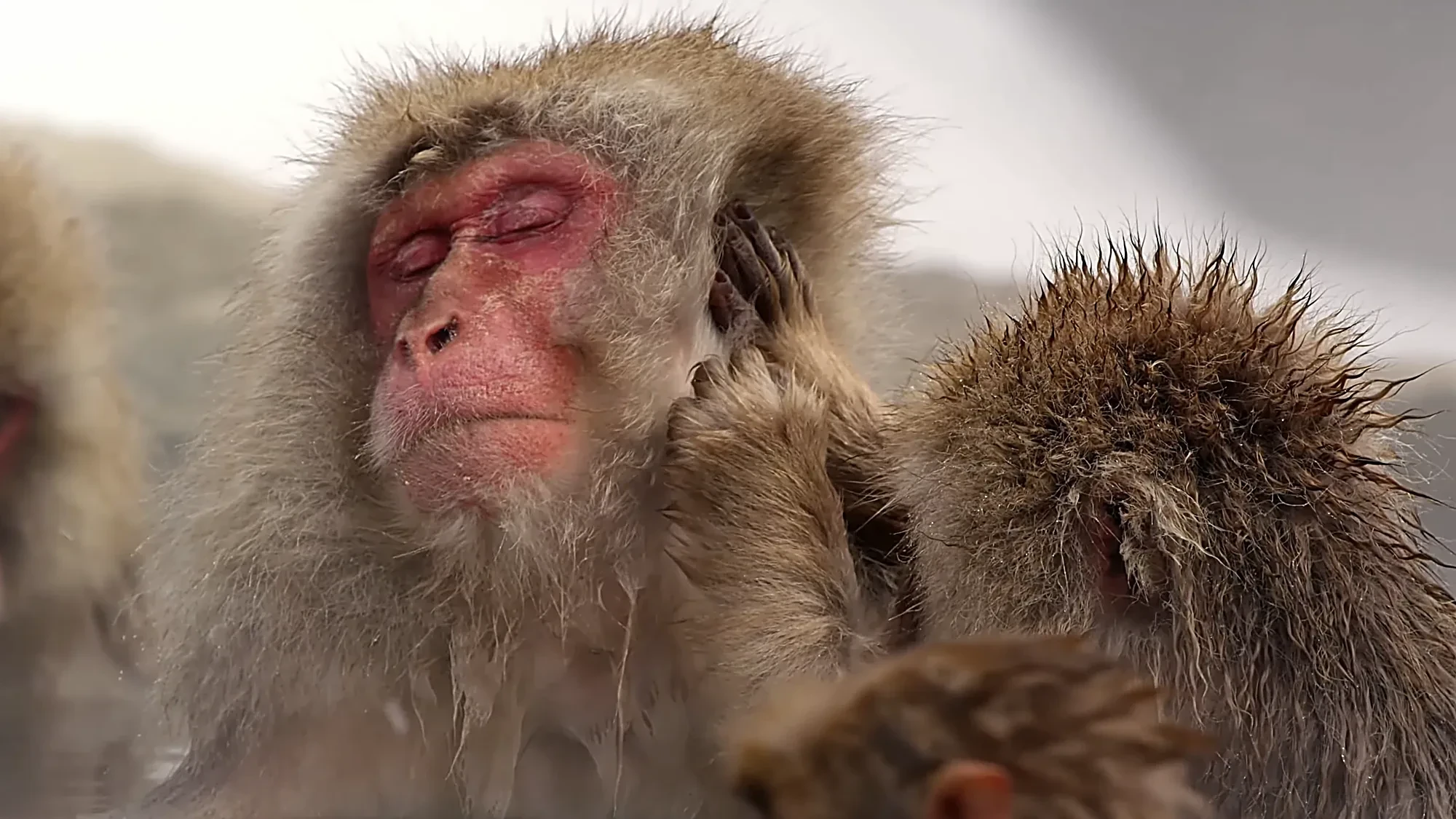
A macaque family grooms together on the snowy riverbank.
Compositions Worth Waiting For
The portrait: a single face, eyes closed in the steam, frame-filling. The classic for a reason.
The grooming chain: two or three monkeys in a row, each working on the next.
Mother and infant: strongest from April through summer after birth season, but pairs huddle in the pool all winter.
The environmental shot: wide, monkeys small in the pool, snow and cliffs dominating. It tells the story the portraits cannot.
Behavior: juveniles play-fighting in snow, a dominant male displacing a bather, the shake-off as a monkey exits the water.
Etiquette Is Part of the Craft
Flash photography is prohibited — it startles the animals and earns immediate staff attention. Keep a few meters of distance even when a monkey wanders close, never bait or call to the animals, and stay aware of the visitors around you in the compact viewing area.
On peak winter weekends, clean backgrounds require patience rather than aggression: hold your position, wait for gaps, and let the scene come to you. The monkeys repeat their behaviors all day; the photographer who waits calmly almost always outshoots the one who chases.
Drones are not permitted at the park. Check current photography rules posted at the entrance on your visit.
Frequently asked questions
Are tripods allowed?
Will steam ruin my lens?

Show all sources
1. 地獄谷野猿公苑【公式】 (Jigokudani Monkey Park, official) — The park's official account: opened 1964, elevation, bathing behavior, admission, conduct.
Verified July 7–16, 2026
Related guides
The Park and Monkeys
Best Time of Day to See Snow Monkeys
The first two hours after opening. Peak bathing, the best light, and the platform before the tour buses.

The Park and Monkeys
Snow Monkeys in January
The coldest air, the deepest snow, the most reliable bathing. The famous photographs are made this month.

The Park and Monkeys
Snow Monkey Park
Wild macaques bathe in a hot spring in the Nagano mountains. Nowhere else on earth do monkeys do this.