On this page
Quick answer
Summer monkeys are still wild macaques at arm's length — infants clinging to mothers, juveniles wrestling, lush green scenery on an easy trail — but hot-spring bathing is rare in warm weather. It is a worthwhile wildlife encounter, not the iconic scene.
Ask when to visit the Snow Monkey Park and every answer points to winter. Fair enough — the bathing scene is a cold-weather phenomenon. But the troop does not migrate, the park does not close, and a summer visit, taken on its own terms, has real rewards that the winter crowds never see.
First, the Honest Part
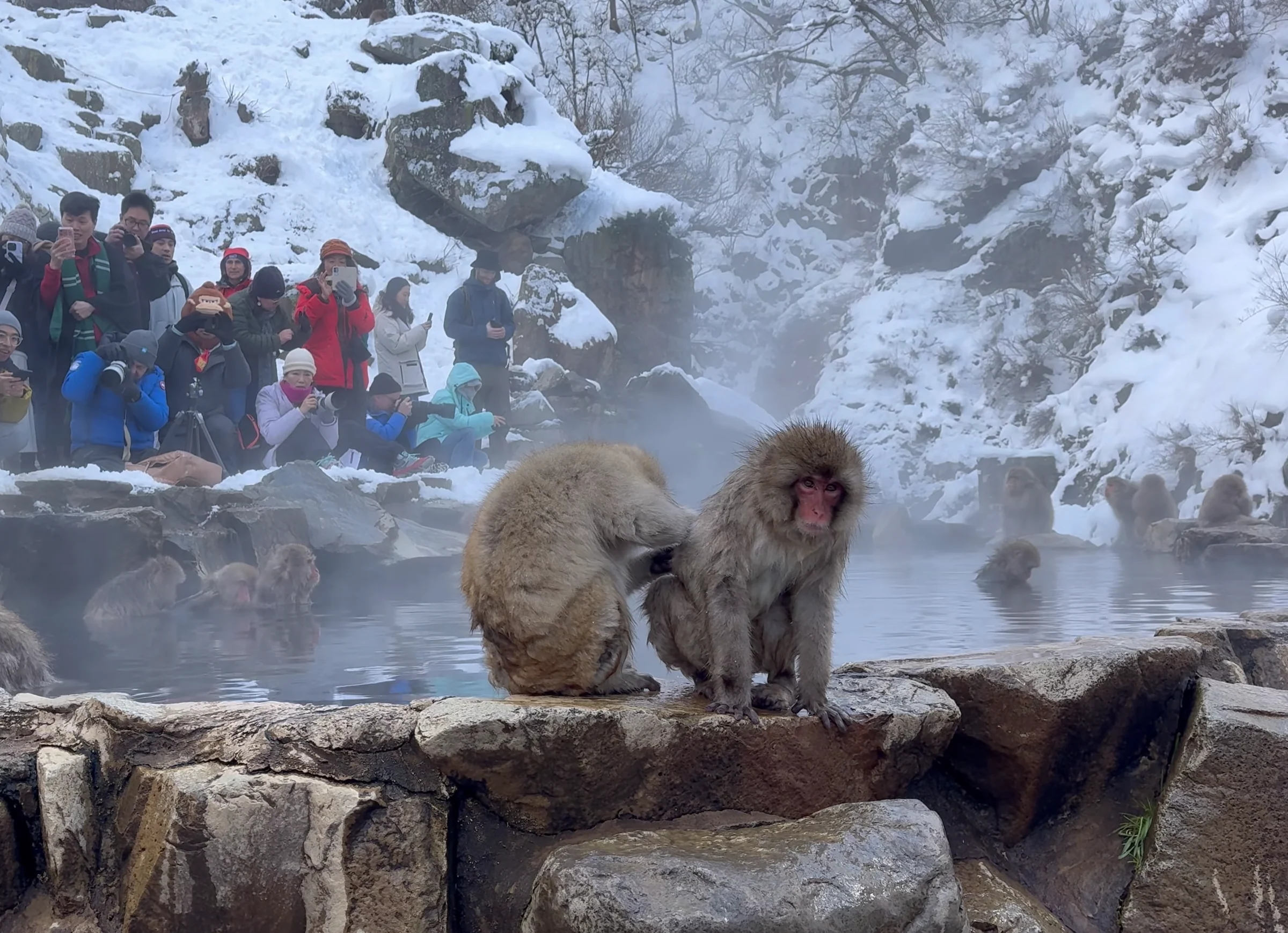
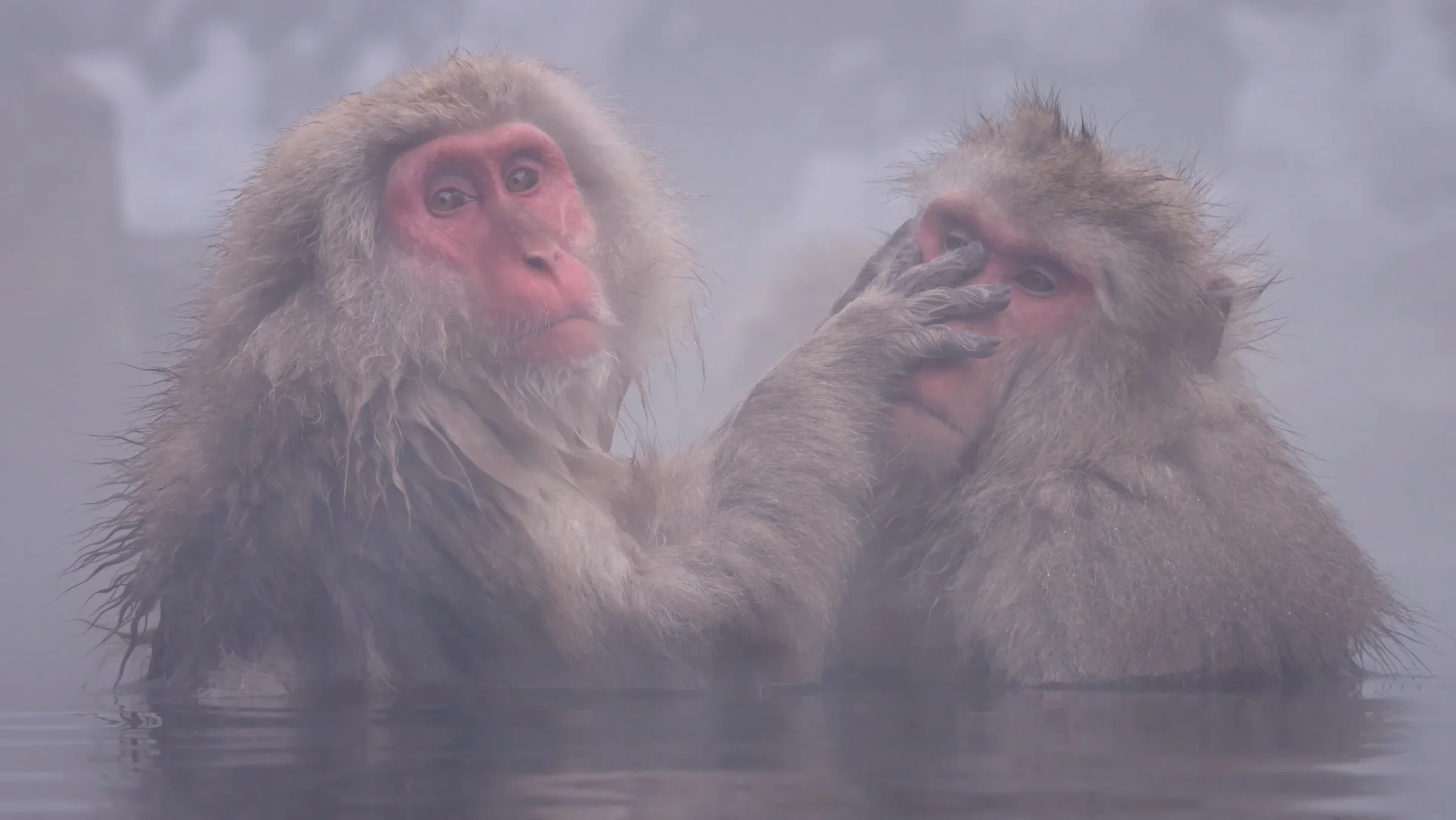
From June through August you will almost certainly not see monkeys soaking in the hot spring. Bathing is a comfort behavior driven by cold; in warm weather the pool holds little appeal, and the macaques spend their days foraging, grooming, and dozing in the shade. If the steaming-pool photograph is the entire reason for your trip, wait for winter — our seasonal guide explains the calendar in full.
What Summer Actually Offers
Baby monkeys. Birth season runs April through June, so summer is prime time for infants — tiny, dark-furred, wide-eyed macaques clinging to their mothers' bellies or taking wobbling first explorations while juveniles tumble around them. For many summer visitors, this outshines the absent bathing entirely.
Natural behavior at close range. With no pool to anchor them, the troop spreads through the viewing area and surrounding slopes, and you watch macaque society at work: grooming chains, hierarchy disputes, play-fighting, foraging lessons. The proximity that makes Jigokudani famous applies in every season.
The valley in green. The 1.6 km (~1 mi) trail becomes a genuinely pleasant forest walk under full canopy, cool and shaded even on hot days, with the Yokoyu River running below. The volcanic steam vents that name the valley — Hell Valley — stand out strangely against the lush growth.

Beyond the village, cedar-shaded paths and old water channels lead into the green hills.
Solitude. Summer is the park's quietest season. Midweek, you may share the viewing area with a handful of people, a ratio unimaginable in January.
Summer Practicalities
Hours: roughly 8:30 AM to 5:00 PM April through October — a longer day than winter allows.
Heat: the valley sits at 850 meters, so summer is milder than Tokyo, but midday can still be warm and humid. Mornings are best for comfort and activity alike.
Gear: ordinary walking shoes, water (kept hidden from curious monkeys), and a rain layer for mountain showers. The full kit list shrinks to almost nothing; see the trail guide.
Sightings: the troop ranges more widely when food is abundant, so on rare days the monkeys may be sparse at the viewing area. Park staff post activity updates; check before you walk in.
Making Summer Worth the Trip
Summer suits travelers already touring Nagano — perhaps hiking at Kamikochi or visiting Zenkō-ji temple — who can fold the park into a broader itinerary rather than making it the sole destination. Pair a morning visit with an afternoon in Shibu Onsen, where the bathhouses feel wonderfully contrarian in August, and you have a fine, uncrowded mountain day.
The snow monkeys without snow are still wild macaques at arm's length, raising their young in a steaming volcanic valley. Winter sells the photograph; summer sells the place. Both are worth seeing — just not for the same reasons.
Hours vary seasonally; confirm current details on the park's official website.
Frequently asked questions
Why visit in summer at all?
Do monkeys appear less often in summer?

Show all sources
1. 地獄谷野猿公苑【公式】 (Jigokudani Monkey Park, official) — The park's official account: opened 1964, elevation, bathing behavior, admission, conduct.
2. 山ノ内町役場 (Yamanouchi Town official onsen list) — Municipal record: park access, walking times, climate and setting.
Verified July 7–16, 2026
Related guides
Plan Your Visit
Worst Time to Visit
There is no bad month at Jigokudani, only mismatches. August for bathing, New Year for quiet: both wrong.

Plan Your Visit
Can You See Snow Monkeys Without Snow?
Yes. The troop lives here year round. But the bathing that makes the photographs is cold weather behaviour.
Plan Your Visit
Best Time to See Snow Monkeys
January and February for snow and steam. June for newborns. The monkeys are there every day of the year.